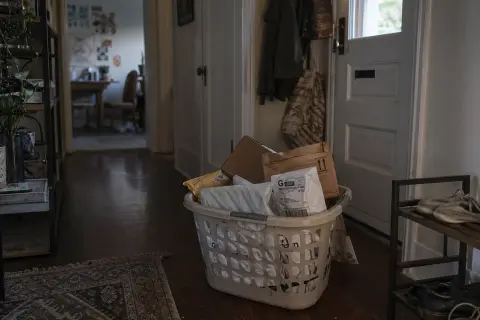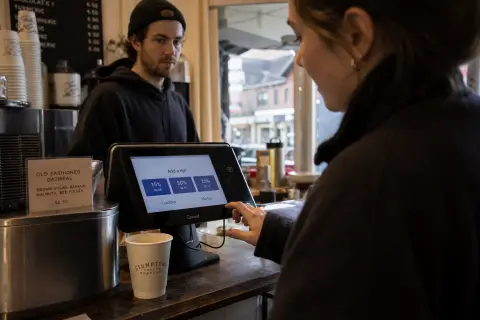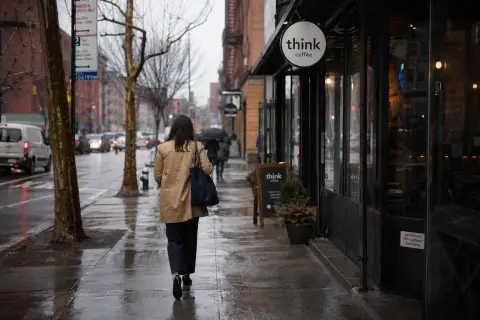
The Purchase Begins Before Anyone Clicks Buy
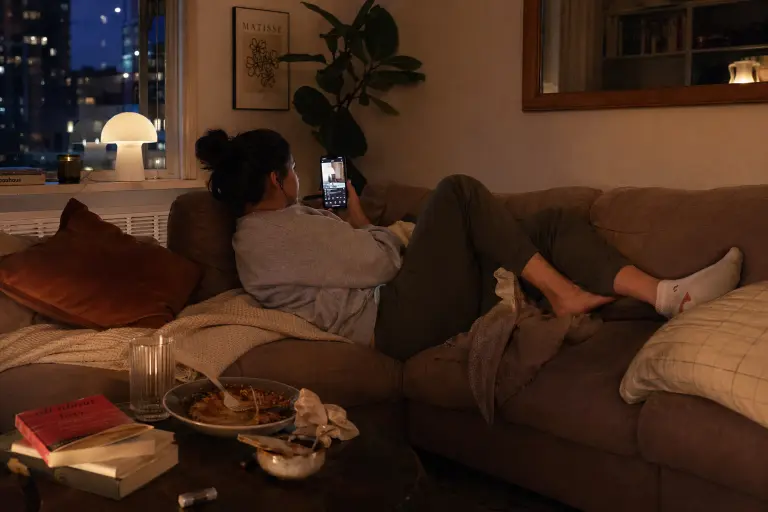
On a Thursday evening, Maya sees the lamp for the first time while lying sideways on her sofa, one sock half off, dinner cooling on the coffee table. The video is not about the lamp. It is a room reset, one of those quiet 38-second clips where a person wipes down a wooden table, changes pillow covers, lights incense, and turns a small mushroom-shaped lamp toward the wall.
There is no product tag. The creator does not say where the lamp is from, which makes the comments frantic in the way comments become when desire has no address. Where is the lamp? Need the lamp. Is it vintage? Someone says it looks like a Danish design from the 1970s. Someone else says there is a cheaper version on Amazon. A third person warns that the Amazon one smells like plastic when it heats up.
Maya saves the video and forgets about dinner for a while. Three days later, the lamp follows her to Instagram, but not as an ad. A friend posts a photo from a small apartment in Lisbon. In the corner of the image, near a pile of books and a glass of wine, there it is again, or something close enough to be emotionally identical.
The lamp has become less like an object and more like a mood she keeps recognizing. She screenshots it. On her lunch break the next day, she searches Google Lens. At night she scrolls resale listings. On Saturday, she walks into a design store she had passed a hundred times and never entered, because the window display suddenly looks like her saved folder.
Why the lamp mattered before the sale
The object entered Maya's life as atmosphere, then as evidence, then as comparison. By the time it reached checkout, it had already passed through comments, a friend's apartment, a resale search, and a design store she did not go to with buying in mind.
Why did shopping stop moving in a straight line?
For years, commerce tried to imagine the shopper as a person walking down a hallway. Awareness came first, then interest, then consideration, then purchase. It was a tidy model, useful for diagrams and boardrooms. But everyday life was never that tidy, and the phone made the mess visible.
People do not wake up wanting to enter a purchase journey. They wake up late, answer messages, watch videos while brushing their teeth, notice what their friends are wearing, compare prices after midnight, abandon carts because shipping feels rude, walk into stores to kill time, and buy something two weeks later because the need has returned in a different mood.
The modern path to purchase is not a path so much as a pattern of returns. A product appears, disappears, reappears with social proof, becomes suspect, becomes desirable again, gets compared, gets touched, gets postponed, gets bought somewhere else.
The systems measure the last door, while human desire came in through the window.
A clean checkout often hides a messy chain of recognition, doubt, and social proof.
How do products get discovered socially but bought somewhere else?
Running shoes in Chicago
A teenager sees a pair of shoes in a 12-second TikTok, pauses, zooms, reads the comments, asks an older brother, tries them on at a mall store, then has his mother buy them online because she has a coupon and wants easier returns.
Ceramic pans in Manchester
A woman sees a chef make eggs in near silence on Instagram, then spends days checking YouTube and Reddit before buying a different pan in a physical store after lifting three and deciding one feels right in her wrist.
Strollers in Manila
A father notices a stroller in the background of a family vlogger's airport video, then spends two weeks watching how parents fold them and where the wheels catch before buying after an in-store demo makes the fold feel real.
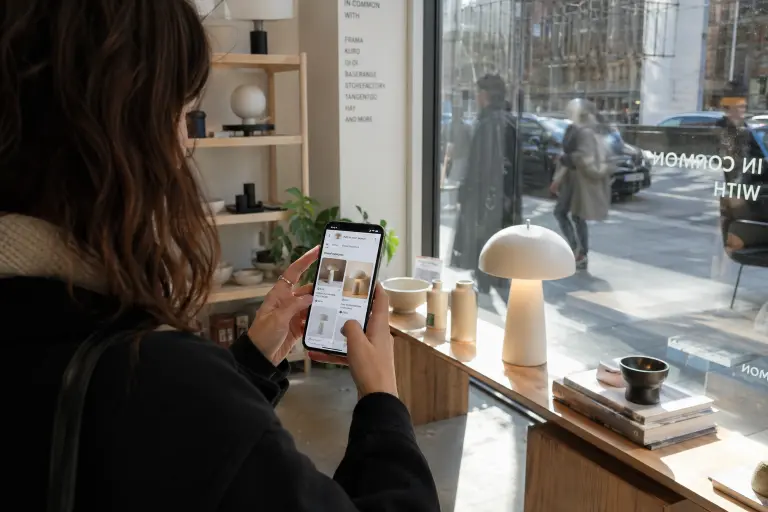
What role do physical stores play when everything starts online?
The store did not die. It changed jobs.
For some shoppers, the store is now a theater of proof. It answers questions the screen cannot answer. How heavy is it? Is the fabric scratchy? Does the color look cheap in daylight? Does the lid close with a satisfying sound? Can I imagine this in my home, not in a styled apartment with perfect morning light?
Stores are also relief. After hours of tabs, reviews, price comparisons, sponsored posts, affiliate links, and conflicting opinions, a store can offer a kind of finality. Here is the thing. Here is the human being who can answer a question. Here is the box in your hand.
How do comments, creators, and group chats change trust?
The most powerful retail spaces today are often not stores or websites. They are conversations.
A comment section can turn a product into a phenomenon, but it can also expose its weakness faster than any formal review system. Someone asks whether the white dress is see-through. Someone else says the zipper broke. A third says they wore it to a wedding and got five compliments. Then a person with no profile photo writes, I work in alterations and the seams are bad.
Group chats have become private buying committees. A person sends a screenshot and waits for the verdict. Too expensive? Cute but not you. I have that and love it. My cousin returned it. Wait for Black Friday. This social friction slows some purchases and accelerates others.
The quiet power of background objects
A product shown casually in a real room often feels more believable than the same product in an ad. The shopper gets to feel like they discovered it, and discovery is a more intimate pleasure than being targeted.
Why are shoppers more patient and more impulsive at the same time?
One of the oddities of contemporary consumption is that people can take six weeks to choose a blender and six seconds to buy a novelty mug. This is not irrational. It reflects a split between considered purchases and mood purchases, between things that must perform and things that simply need to delight.
Inflation, economic uncertainty, and the normalization of price comparison have made many shoppers more deliberate. They wait for sales, use browser extensions, read long reviews, compare dupes, buy secondhand, and ask whether an object will actually improve daily life.
Yet social platforms are built to collapse distance between seeing and wanting. A product appears at the exact moment a person is tired, bored, lonely, inspired, or trying to become someone slightly better by Monday. The small purchase becomes a lever for mood.
The nonlinear journey holds both impulses. It allows delay and surrender. A shopper can save a product for months, then buy it suddenly after seeing it one last time in the right context.
What happens when the journey becomes invisible?
Forty or fifty years from now, people may look back at our era of carts, tabs, discount codes, and checkout pages the way we look at paper traveler's checks or calling a store to ask if something is in stock. Not ridiculous, exactly, but effortful in a way that reveals the limits of the time.
Imagine a woman named Lina in 2072, living in a dense coastal city where apartments are smaller, climate systems are stricter, and household objects are expected to justify their space. Her home knows the materials, age, repair history, and energy use of most objects inside it. Not because everything is sinister, but because maintenance became too expensive and waste rules became too precise to manage manually.
Lina does not browse for a new kettle. Her old one begins heating unevenly, and the kitchen surface notes the inefficiency. Repair appears first, because regulation and cost have made repair the default. The system checks local repair schedules, parts availability, and the kettle's material passport.
A future that still feels human
There is no search bar. There is no feed. There is a short conversation while Lina makes tea at a neighbor's place. The options are projected onto the counter in plain language: repair, refurbish, borrow, replace.
The danger, of course, is that invisible journeys can become invisible manipulation. If the path disappears, so can the moment of reflection.
What should we understand about the new path to purchase?
The old funnel assumed the shopper moved toward a product. The new reality is that products move through the shopper's life until one of them sticks.
A person may first encounter a product as atmosphere, not information. The first signal is often emotional: that belongs to a life I recognize, envy, need, or want to try.
Then come the checks. Is it real? Is it good? Is there a cheaper version? Will it last? Can I return it? Does anyone I trust have it? Can I see it in person? Can I get it before Friday? Does buying it make me feel clever, wasteful, prepared, stylish, safe?
The purchase is no longer the end of the story either. Unboxing, reviewing, returning, reselling, repairing, and showing the product in use all feed the next person's journey. Every buyer becomes part of the discovery layer, whether they intend to or not.
Common Questions About Nonlinear Shopping Journeys
What finally happens to Maya and the lamp?
The lamp arrives on a Tuesday. Maya picks it up after work from a counter at the back of a store that sells things she did not come to buy: candles, chargers, linen spray, children's socks, a very convincing travel mug. The employee scans a code, slides the box across, and says, I love this one.
At home, Maya cuts the tape with a kitchen knife. The lamp is smaller than the one in the original video but better for her table. She tries it in three places before it finds the corner near the books. When she turns it on, the room changes in a way that is minor and undeniable.
The wall warms. The sofa looks less tired. The evening gathers itself.
She takes a photo but does not post it. Not yet. For now, the object leaves the marketplace and enters life. It becomes part of the room, part of the habits of coming home, part of the soft background in which other decisions will be made.