We Used To Wander: How Browsing Faded and Curation Took Over
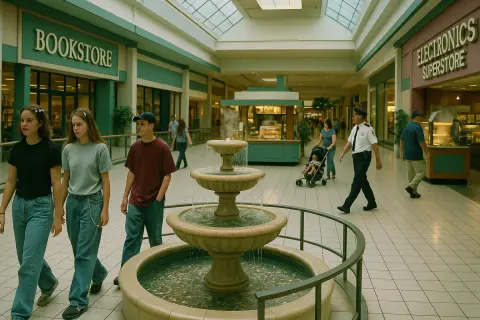
The last time I remember truly getting lost in a store, it was not in the expensive vintage shop near the train station or the concept store with a DJ at noon on a Wednesday. It was in a suburban mall that smelled like buttered pretzels and neon. We rode the escalators just to see what was on the other level, drifting into a big-box bookstore with its heavy tables stacked shoulder-high, then into a chain called Natural Wonders where they kept amethyst geodes under soft spotlights like the moon. A friend of mine tried on a hundred different hats at PacSun and came out wearing the same hoodie he arrived in. No one had a plan; we were not hunting. We were practicing a ritual: to be open to what might appear.
Browsing used to be an activity that was also a mood. Wandering was the point. The trick of it was giving time away: an entire Saturday inside a place designed, yes, to convert you into a buyer, but also to bathe you in abundance. The abundance softened your intent. You found a ceramic mug in a store you never meant to enter. You found a CD because the clerk had written a note on a shelf talker that said: "If you like Blur, try Pulp."
Today, if you carry a phone, you do not drift. You point. You aim. You ask a question of a search box and receive the shortest path to resolution. If you open a feed, it will decide for you. We like to talk about how algorithms have learned us. The stranger, sharper truth is how we have learned them. We have trimmed our desires into the shapes that elicit frictionless outcomes. We do not linger; we refine the query.
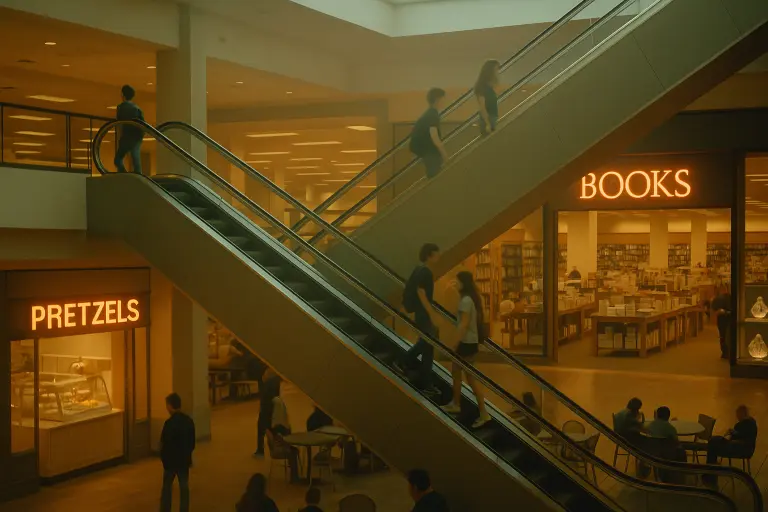
What did we lose when we stopped wandering?
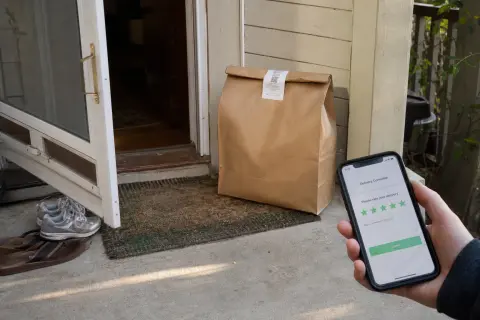
It did not happen all at once. The early web flirted with serendipity. StumbleUpon was a verb. Blogs felt like little rooms with mismatched chairs and open doors. Then search got good, then better than good, then anticipatory. Amazon learned to position a buy button at the precise point of surrender. The recommendation rails grew under everything: "Customers like you also bought" went from curiosity to destiny. On TikTok Shop, a single swipe can carry you from skincare to kitchen gloves, each video hotwired to a call to action, and those floating carts run on data you volunteered with every watch. Temu turned shopping into a gameboard and a countdown. Shein did the same with a feed of micro-drops timed to the rhythms of boredom. Drive-up lanes at big-box stores and same-day couriers turned the act of obtaining into a clean handoff. Even in person, it became efficient: park, text, pop the trunk.
We still tell ourselves we are discovering. The truth is that discovery is now a designed arrival. The leaf floating on the current was lifted by a hand upstream.
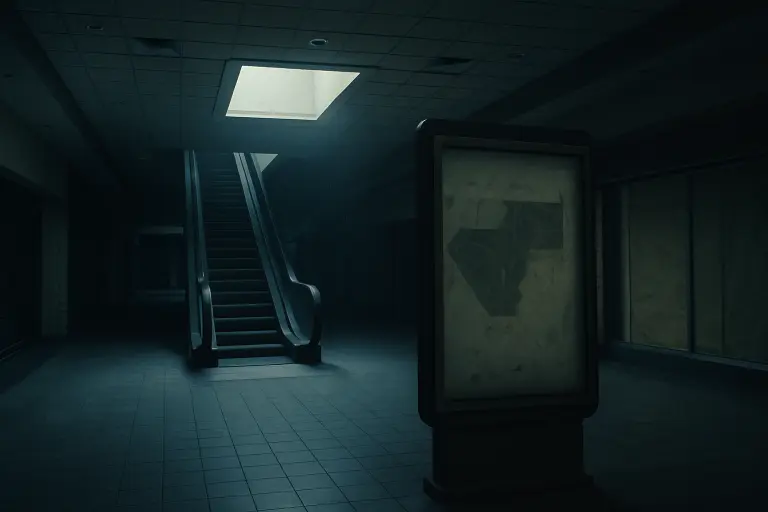
If you wander through the ghosted skeletons of malls on certain YouTube channels, you can hear the climate system still working. The escalators frozen at an odd height. A directory map with smudges where people pressed their fingers.
The language of these places was always orchestration: anchors and corridors, food courts and funnels. But at least you could get lost inside the script. You could exit the corridors into a shop you did not intend and let the object surprise you, become heavier in your palm until it became yours. It demanded a kind of faith in the world: that if you walked with no target, something would meet you.
Mall culture was more than a ritual of spending; it created a third space in the shape of a weatherproof town square. Teenagers learned to read social codes by moving past storefront windows acting like mirrors. Parents killed an hour with a kid who could only be tethered by free samples of teriyaki. Older folks circled blue-tiled floors before the shops opened, mall-walking gospels in cotton tracksuits. The place encoded its values right in the architecture. The map said You Are Here in a diagram that became a habit of mind. To navigate was to consider what flows and detours might offer.
Today, the map is replaced with a search bar that says What do you want? It is intoxicating to be asked this every hour of your waking life. It is also a trap. If you answer too fast, you fold your world into yourself.
Why did wandering disappear?
The answer is not only algorithms or attention or the fact that the rent in the mall kept rising while retail media margins got fat. It is also a story about the death of extra time. We learned to price every hour like a gig. Parents who used to taxi kids between lessons now deploy calendars like logistics software. The just-in-time supply chain of life pushed us from browsing to execution. When you can get dog food delivered in three hours, it feels irresponsible to spend half of that time strolling down a pet aisle speculating about flavors.
Then came the pandemic, which turned efficiency from preference to doctrine. The curbside rituals stuck because they saved something invisible: decision fatigue. Why browse when a phone decides, and the phone decides because it has become a part of your nervous system? Your playlist learns your lulls. Netflix auto-plays the next thing. Grocery apps reorder the items you forgot to put on your list because you buy them every three weeks. If you install a smart fridge, it will scold you for letting the lettuce die. Devices push you into a life without inventory surprises.
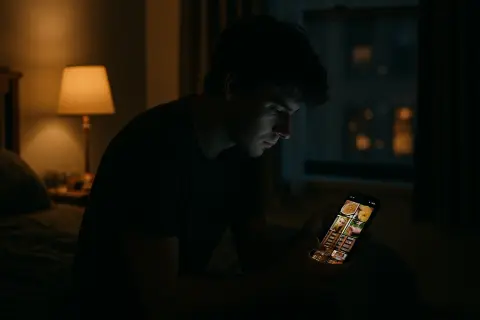
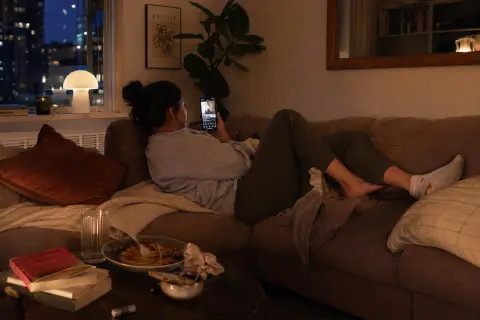
We are trained now to ask, to sort, to filter, to expect results. The world is a drop-down menu. Even our social discovery is path-dependent. BookTok does not send you to an aisle. It sends you to a specific title with a video soundtrack and an annotation of tears. The feed confronts you with the apex of recommendation on a loop while you are most defenseless: tired, horizontal, thumb moving with tiny habits that feel like rest.
Retail media networks made this the business plan. Grocery chains now behave like publishers. Your cart is a canvas for sponsored suggestions. The end cap is in your app. There is nothing inherently sinister about this. Plenty of products find the people who need them. But the room to be surprised shrinks when every moment is modeled.
What did browsing used to do for us?
Browsing was a social technology that taught us how to live with unknowns. It asked us to like something we did not yet know how to want. To let our hands trail the fabric of what might fit us. The teenage ritual of walking a mall was not just about acquisition; it was about witnessing each other across possibility. It forged taste through ambient exposure to difference. In thrifting, there is still a vestige of this: to sort a rack of jackets with different past lives, to catch a glint. But even thrift has a filter now. Apps like Depop, Poshmark, and Vinted compress the hunt into keywords. The wildness of the bin gives way to search terms like "boxy carhartt chore coat size L."
Browsing also softened the timeline of desire. You might yearn for something, return to it, leave, come back weeks later. Wish lists lived in your head. The buy now button mutated yearning into purchase with a velocity that trained our wants to be shallow and frequent. Buy now, pay later fractured the pain into palatable bites. The cultural sentiment of treat yourself merged with the precarity of hustle culture. Objects became small proofs that the algorithm saw us.
And what happened to the places where wandering worked best?
Some transformed. The suburban mall where I once loafed now hosts a coworking space, a physical therapy office, and a micro-fulfillment center disguised as a vacant anchor. The escalators are running again because morning walkers need them. There is a pop-up area near what used to be Sears, staffed by people who know how to read what a passerby is hungry for because the products change weekly. They call it a makers market, but it is really a curated lane of novelty. Browsing has been turned into a ticketed experience. It can feel like a museum or a small festival, a place built less to sell you a specific item than a story about how objects can gather into a set of possibilities.
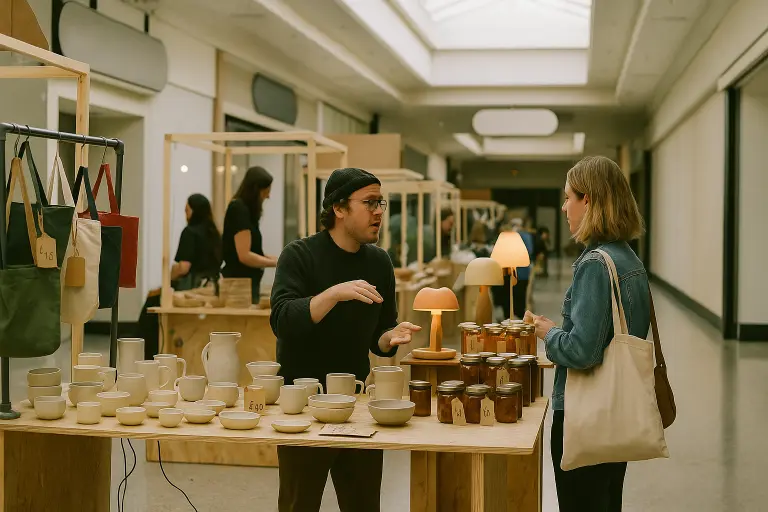
Elsewhere, discovery retreated into media. Emails with the subject line Five Things You Might Like replaced window shopping with paragraph-length persuasion. Newsletters that call themselves serendipity engines make recommendations that feel like a friend sharing a song. Podcasts banter their way through sponsor reads that do not feel like ads until you hear the liminal code: forward slash, now. The most interesting retail experiments began to behave like theaters. Look at Dover Street Market, or the early days of Glossier's flagship, or the oddball concept floor at Showfields where an apothecary sat next to a robotic espresso cart. The act was not just to buy; it was to enter a story shaped by someone with taste and control.
If pure wandering is an endangered species, curation is its conservation park. The future will be full of these designed forests.
How did our desires become searchable?
It happened as we gave up our friction. We traded the slow-work of stumbling into something for the fast-work of asking for it. The web evolved in response. Search became the interface for life. And search grew teeth. Every query is a question you ask a machine that has already been asked billions of times, so it knows what you mean even before you do. The illusion of your own uniqueness dissolves a bit each time it finishes your sentence. Personalization promised liberation from noise. We forgot the utility of noise: it is where the new flickers.
There is also a risk calculus hiding here. If you are a buyer at a big retailer now, you do not win by corralling novelty. You win by squeezing variance. Forecast models perform better when the assortment is narrow and your ad inventory is targeted. The store becomes an interface for conversion. We measure dwell time as a leak in the pipe. The word browsing becomes a pejorative: tire-kicking without the purchase.
And still: people are haunted by the pleasure of aimlessness. Physical proof lives at farmers markets and in the revival of record stores, where flipping through crates is evidence that bodies like to be surprised by the composition of a room.
But as a mass habit, wandering does not pencil out the way it used to. The cost of commercial space, the speed of demand, the cult of measurement all conspire politely against it.
The leaf floating on the current was lifted by a hand upstream. Discovery becomes a designed arrival.
So where does discovery go next?
A brand will invite you into a tiny, temporary world: forty minutes inside a scent laboratory with a choreographed arc; you select three vials, an AI listens to the words you use to describe your grandfather's garage, then mixes something approximate. A furniture gallery becomes a living story; you book a time slot, are matched with a guide who also writes essays about chairs, and you leave not with a sofa but with a map of how to think about sitting at home. Pop-ups become less like sales outlets and more like theater residencies. Tickets will sell out because scarcity is its own algorithm.
At home, the concierge will slip into your conversations. The voice agent that schedules your dentist will team up with a shopping model that has parsed your last six months of returns. It will not push you to browse a site; it will present two options, built from what it knows you tolerate. It will be gentle, persuasive, and wrong just enough to keep you on the hook because discovery works best at 20 percent surprise. Screens will still exist, but they will mostly show the short list. The long list will live behind glass that you are never invited to shatter.
We are not far from a world where walking into a store means having already been pre-matched. As you pass a threshold, your preferences run like a silent resume, negotiated through privacy settings you forgot to update. A stylist meets you by name. You conduct an appointment you did not know you booked. The old awkwardness of fitting rooms is replaced by a space that feels like a hotel bathroom; the mirror can toggle between the future and the past: here is how these jeans will relax in a month; here is what this blazer looked like at your last meeting when you wore almost exactly this shirt. You are invited to clasp a chain that was pre-sized against your neck, and there is a story attached to it, not the brand story but the designer's grandmother teaching her to knot string. It is moving. You tap to pay as if paying is just a way of applauding the plot.
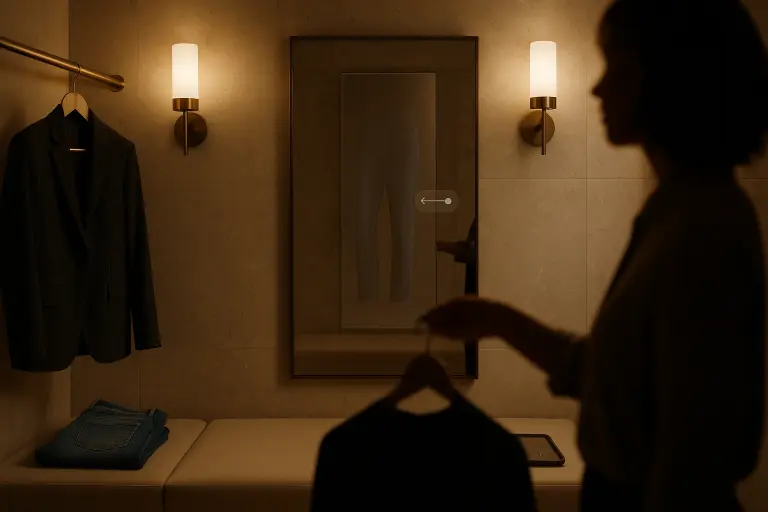
Meanwhile, the browser tab as an object of collection will fade. There is a generation after us that does not keep twenty tabs open as a form of hope. They will never know the pain of losing a cart because the site updated its cookies. They will employ a keeper of their tastes, always available, a model trained on their comments and returns, their photos and calendar, their daily routes through the city. There will be something troubling about it, a digital twin who shapes their material life by guessing what they will like five minutes from now. Discovery becomes a managed reveal.
The most obvious version of this will be the curated bundles. We have seen early forms in influencer starter kits and mystery boxes. In mid-century form, you subscribed to a book club, a vinyl-of-the-month, a beauty sampler. In the near future, the bundle will cross categories because life does not respect product verticals. A table setting shipped to you on the week you host your first post-baby dinner party. A travel kit assembled not around a destination but the moods you crave while there: anonymity, novelty, or comfort. The curators behind these will be as much writers as merchants, people who can assemble a narrative out of objects that squares with the one you are trying to live.
What will physical retail look like when browsing is a relic?
Imagine this: stores turn into galleries of decision. You do not come in to roam; you come in to agree to something you have already mostly chosen. The act of looking is replaced by the act of confirming that the suggested path is still yours.
A few places will resist. They will advertise themselves not as stores but as wandering houses. They will force you to slow down by refusing to name their sections. Rooms will be labeled not with departments but with verbs: linger, suppose, revise. You will check your phone at the door. Your guides will be called readers. The goods will not be consumables that beg to leave instantly; they will be durables that feel like punctuation marks in a life. The ratio of product to empty space will be high. People will weep. They will write about it like a concert.
Other spaces will turn activism into a retail form. Because when discovery becomes curated, the power of who curates matters. We will see micro-co-ops hosted in old storefronts where neighbors bring their own assortments once a month, a patterned garage sale with rules. The line outside will look like the lines at Supreme a decade earlier, but the object of desire will be a rotating curation of origin stories. Maybe a grandmother who makes pickles sits next to a coder who fabricates lamps. The common currency will be trust, built not by algorithmic proximity but by hours shared.
There will also be grief. We will miss the way an accidental object could change a day. We will mourn getting lost in a place that did not ask us to know who we were before we walked in. Some of us will stay up too late flipping through the online equvalent of bargain bins: glitchy surplus sites, odd lots, liquidation marketplaces that behave like tide pools. We will chase the old feeling at garage sales, where search cannot shrink the field to a keyword and the perfect plate reveals itself by weight. Thrifting will still sustain us because the past refuses to be perfectly categorized and because there are always more jackets.
Some will argue that we have not lost discovery, only smoothed it. They will cite how a model can surprise us with a combination we never would have considered, or an app can suggest a walkable route through a city that assembles a day from the hidden corners only locals know. They are not wrong. But curated discovery behaves like an amuse-bouche: delicious, shaped, miniature. It does not sprawl. It does not knock you over in the detergent aisle because you found a brand with a ridiculous name and decided, for once, to let the name win.
The timeline ahead: forty years on
If we skip ahead four or five decades, the landscape resolves. The field of undirected attention is smaller, not because human beings are incapable of wandering, but because our tools do it for us. The assistant on your dining table has spent twenty years watching your gestures. It knows the way your hand hovers when you are deciding whether to say yes. It does not stalk you in the malevolent sense; it serves as a buffer between your curiosity and the market. You can tell it to surprise you. It will honor the request by reaching for curators whose parameters you have pre-approved.
Discovery becomes a profession more transparent than today's influencer. Curators publish their logs, their conflicts, their paid slots. They argue like critics did, and the best are celebrated not for their taste alone but for building rooms where you learn who you are. Design schools offer degrees in object dramaturgy. Field trips replace malls: students spend an afternoon inside a supercurator's dome to see how light, story, and product can choreograph a mood.
Physical retail that remains open seven days a week is mostly service: repair, personalization, performance. Logistics hubs contract to corners. The warehouse ceases to be a place apart and becomes a civic utility, caring for the material flows of a block. You do not roam the shelves. You request an interlude and step into a room where your things are arranged for you to meet them. Walk out with nothing and you feel like you saw a friend in a crowd but could not place them. Walk out with something and it was a meeting, not a catch.
Search continues to manage the bulk of buying. Direct intent handles staples. Subscribe-and-save wraps up the rest. Your toothpaste arrives like a pension. Your underwear rotates like a calendar. The number of brand decisions you make in a year shrinks by half. When you do make them, you often feel flattered by the experience. And because life will be crowded with crises, that flattery feels like care.
What happens to chance in a curated world?
It hides inside design. Chance becomes authored. The future's brave honesty is admitting this. Curators will seed rooms with red herrings, with small oddities designed to interrupt your autopilot. The job of retail becomes part theater, part pedagogy: to provoke you into noticing what you would otherwise glide past. It is not the same as aimless wandering. It might be more humane than a page filled with infinite scroll.
Small rebellions
- People will share maps of the city's un-curated corners.
- Independent magazines will print lists of places where you can still browse for real: the salvage yard behind the stadium, the library zine rack on a Tuesday, the alley market that blooms around the indie wrestling show.
- There will be secret shopping clubs whose only rule is no search terms allowed. Bring your hands. Bring an hour. Leave your phone.
We are living through the last broad generation that knew both worlds. The mall-shirted adolescence and the feed-shaped adulthood. We can complain about what was lost or admit what was gained and where it cannot follow.
What should we make now?
For builders
If you build experiences for others, stop pretending that people want more choice. They want better invitations. Design the invitation with respect for their time, yes, but also for their appetite for surprise. Curate in public. List your influences. Teach your audience to browse again in an age that tries to save them from it. Give them the dignified equivalent of walking past the food court and smelling garlic and sugar and perfume and paper. Give them a place where time gets fat.
For the rest of us
And for the rest of us: nurse your own personal aisles. Keep a drawer where objects accrue without purpose. Walk one street over because the light hits a little different. Linger on the radio when a song you do not know does something in your chest. Borrow a book with a bad cover from a library just to see if you can be wrong about the surface. Train yourself to want what you do not yet know how to ask for.
Common Questions About the End of Browsing
It is changing form and shrinking in scope. Unguided wandering is rarer; guided discovery, shaped by recommendations and curated spaces, is growing. The behavior survives where it is protected by design.
Because it optimizes for resolution, not exploration. You reach the answer quickly and expend less effort, but you leave with fewer stories. Satisfaction from browsing comes from the time spent not knowing, which does not fit the efficiency model.
Unlikely. They will shift toward appointments, galleries, service centers, and curated experiences. The few that keep aisles will do so for differentiation or community, not pure sales.
Own the curation. Create limited, high-belief experiences with clear beginnings and endings. Seed moments of designed chance. Be transparent about what is paid versus chosen. Give people fewer, better invitations rather than more options.
Set aside time for unfiltered environments: libraries, flea markets, long walks, open tabs with no shopping intent. Let yourself be wrong on purpose. Make rituals that protect a bit of aimlessness.
We used to wander because the world was not a menu yet. Now it is, and menus can be exquisite if the chef is kind. But once in a while, climb the stairs to the second level of a place you did not intend to visit, and see what the map forgot to print.