The Day We Started Buying Surprise
There is a certain kind of boredom that does not come from lack. It arrives in a room already full of things you asked for. Tonight it is 11:17 p.m., and the phone is glowing with what the phone thinks I love. A hundred micro-movies of people making the pasta I watched last week. Riff after riff on the same capybara joke. Playlists bent to my taste until they have no edges. Like walking a familiar block and seeing, from every window, your own face.
This is the odd cruelty of personalized abundance. In the beginning, the miracle felt like being recognized. After teenage years of radio roulette and TV blocks chosen by a stranger, I marveled that a service could understand my not-quite-mainstream mix of house, cumbia, and midwestern emo. Discover Weekly really did discover things, once. Netflix learned I liked films where nothing happens until everything does. TikTok knew I had a soft spot for people whispering in libraries. It was a little eerie, a little flattering, and very convenient.
But the body knows when a path has become a groove and a groove has become a rut. Now the For You pages and Play Something buttons throw me back into sameness like a hotel alarm that resets itself no matter how many times I set my own wake-up. Everyone I talk to has a version of the same complaint. The scientist friend, whose job depends on curiosity, scrolls and mutters that the algorithm has stopped showing him anything that might change his mind. A cousin in retail tells me she keeps hearing the same four songs in different orders, not just in-store, but in life. Even the dog recognizes the route the phone leads us on.
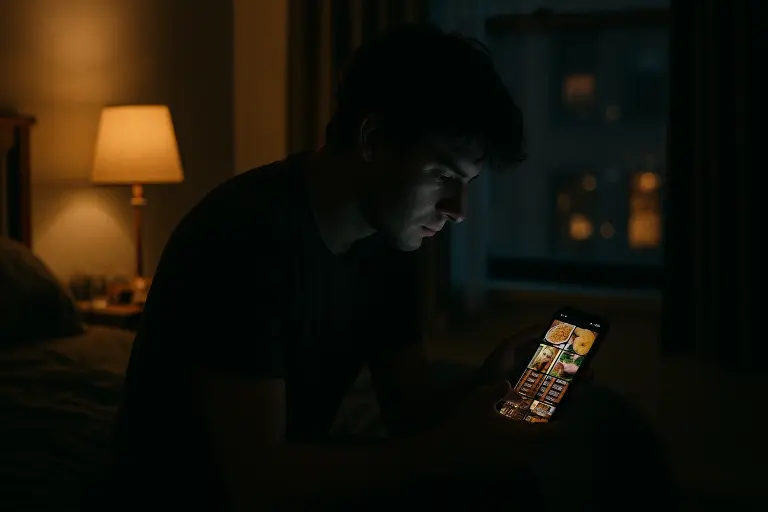
We are losing the tiny shocks we once designed entire weekends around. Not the life-halting surprises, but the small ones that produce a head tilt: the way a burnt toast smell drags you straight to your grandmother's flat; a book falling off a shelf like a conspirator; the choir practice you hear through a community gym door and spend twenty minutes listening to because you did not plan on singing tonight. Those were not built into anything. That was the world appearing before you with its knots still in.
What did it mean to find things before feeds found us?
The older people in my circles talk about riding buses to the end of the line to see what was there. In the first years of the internet, people wandered link by link, and a site called StumbleUpon pushed you into people you did not imagine sharing space with. I do not want to dress the past in sepia. There were limits and gatekeepers then too. But there were seams through which the cold air of randomness could get in.
Today, those seams have been caulked with optimization. The logic is almost elegant in its cruelty. Systems are trained on what kept you there yesterday. They learn to arrange the present so it narrows to a corridor of you. The more precise the fit, the more time you spend. This would be fine if desire were a stable thing. But we do not know ourselves in that neat way. Wanting needs room to ricochet. When it does not, it sours into repetition. You wake up to a meal you asked for and cannot eat.
The economy is not conspiring to bore you. It is conspiring not to lose you. Boredom is collateral damage.
Creators feel it too: ten videos in a row telling the same story in the same time with the same soft keyboard music.
Are surprise buttons actually surprising?
It is telling that platforms keep building a surprise button while making the broader environment less surprising. The Play Something button arrived on Netflix with a breezy confidence. Spotify sells Daylist as an evolving mood ring. TikTok shuffles your deck with a trickster smile but deals from a stack designed to never scare a brand. Even hardware wears novelty like a removable accessory. Pressing Surprise on a smart TV today feels like asking a server to bring you anything and receiving a slightly different Caesar salad.
Creators are not exempt
You can watch this happen from the outside too. Creators are not exempt. Entire micro-industries bloom to exploit predictability. There are workshops on what color caption keeps you watching a maker limewash their wall. There are nights when ten videos in a row tell the same story in the same time with the same soft keyboard music. The economy is not conspiring to bore you. It is conspiring not to lose you. Boredom is collateral damage.
Where do the countercurrents show up now?
There are countercurrents. Libraries swaddle books in brown paper and hand you a blind date with a novel. Randonautica, at its 2020 peak, sent people to random coordinates any given afternoon, to wade through fields and report on a sense of the uncanny they felt there. The thrift store, the yard sale, the box of mixed farm seconds that Misfits Market mainstreamed in the mid-2020s all made a small economy out of defect and accident. BeReal asked for a time-stamped now and reminded you that beauty was not something you had to arrange in advance. There was a year when we all did Wordle together, and for a minute our mornings lined up in a single improbable five-letter chase.
Signals like these did not overthrow personalization; they annotated it. At the policy level, rules appeared that hinted at other ways. The European Union forced some platforms to offer chronological feeds. It was not a revolution, but it was an unlatched window. In restaurants, watch how chefs rediscover tasting menus that slide in a surprise course, or put a dish on the menu that is just surprise fish. Retail dusted off the Japanese idea of the lucky bag. Parents I know use a rule for family walks that says: turn left at every chance.
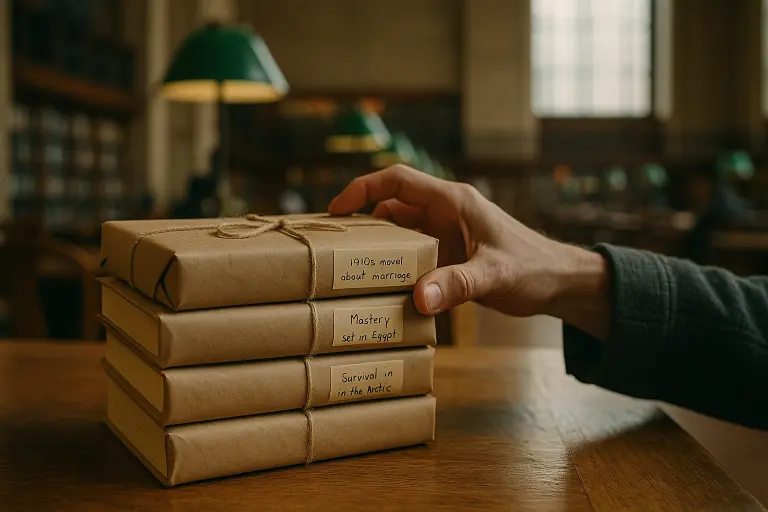
Still, for the most part, we return to our shaped rooms and our playlists that never raise their voices. Even the roughness we introduce wears the costume of control. The blind date book comes with carefully hand-drawn hints; the Daylist is our mood in more clever clothing. The randomizer gets you exactly as lost as you wanted.
The cost is hard to describe because it is an emotional loss more than a measurable one. We are missing the gasp. The course correction. The tiny drop of panic that you can convert into laughter. Surprise asks you to be a person who can be wrong and then delighted. Without it we harden into users of ourselves.
How did we get here?
The long answer involves companies turning attention into the steel beams of entire cities. It involves ad markets that need predictions to price futures. It involves individuals and institutions afraid of harm and confusion. It involves the blessing and curse of scale. There are more things than any one person can see, and filters are essential. But somewhere between filtering and flattening, we lost the practice of wandering.
When I talk to product people, they admit they see it too. The numbers are strange. Engagement is technically up; satisfaction is down. People report feeling both overstimulated and undernourished. There is a term circulating quietly in UX meetings: surprise fatigue. Not from too many surprises, but from too many fake ones. Developers mock up playful features that their own metrics will then choke. You build a shuffle that is not a shuffle but a silhouette of one.
Which is why the next thing that happens feels both depressing and inevitable: surprise becomes a product. Not the sprinkle of the Surprise Me button, but the regulated, measured sale of unpredictability itself. In a future I do not find hard to picture, sometime in the late 2060s, we will set aside a budget not for streaming or storage, but for chance.
Termsurprise fatigue
Not from too many surprises, but from too many fake ones.
Will we pay for surprise?
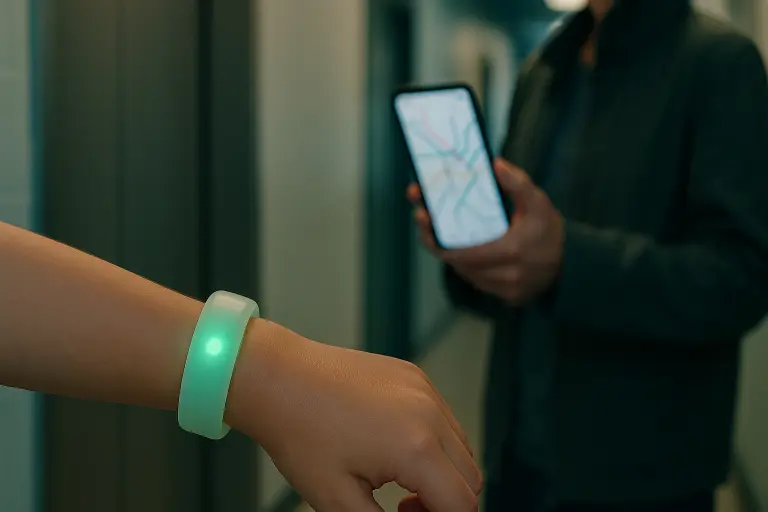
The first time I see this, it is a kid in my building wearing a translucent wristband. His parents call it a wander credit. It is tied to their household AI and grants a weekly window in which the feed tilts and the ambient helpers step back. The wristband blooms green, and for an hour the routes offered by the transit app stutter into possibilities that do not end at school or work or the store where the AI thinks you like the tea because you bought it once when you had the flu. During wander time you get suggestions pulled from categories you never touched. A spare seat app offers two tickets to a dance in a language you do not speak; a grocery service suggests quince. The kid's laugh has a note in it I realize I have not heard from my own in a long time.
Entropy, as a service, will get an acronym. ESP: Entropy Service Providers. You will subscribe to one not unlike you once subscribed to an ISP. Instead of bandwidth and data caps, you will have Surprise Allowance and Scare Threshold. You will be able to port your surprise between devices. You will be able to lower the guardrails if you think your heart is strong. There will be reviews for ESPs. People will describe them the way we now describe restaurants: the portions of chaos were small, but the plating was elegant.
How might retail, cities, and homes invite surprise?
Retail
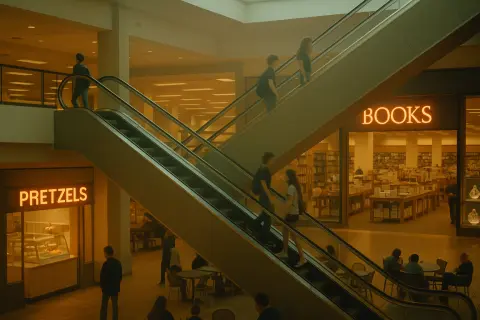
Some of this will flow into the built world. In 2067, malls, still alive in a new form as civic trade commons, will host roving aisles that reconfigure by quorum. You will go to a store twice in a month and notice that the chocolate has moved next to the paper towels, the camping stoves flirt with cut flowers, and a chalkboard in the lobby will list the days of the week by what sort of chance was invited. Tuesdays might be linguistic anomalies: shop signs in borrowed alphabets; Thursdays could be spatial: a one-way route that insists you take a detour through toys you forgot to buy when you were young. We have always known that retail is choreography. In forty years it dances back.
Cities
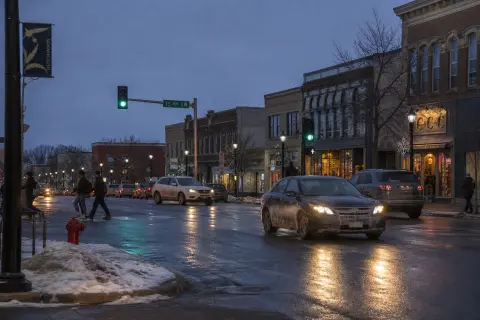
Cities will negotiate their own surprise budgets. Transit agencies, obsessed for decades with optimizing the peak, will introduce Wander Mode: a setting on the pass that participates in a municipal serendipity program. Your commute will occasionally nudge you two stops further to a bakery you have never tried. Pedestrian tunnels will push ambient sound from folk ensembles you did not plan to hear. Museums will sell Nightwalks, where the curation is not of objects but of routes. There will be bad nights when the only thing you discover is a new kind of tiredness, and good nights when a stranger teaches your child a rhyme in Swahili while you wait under a streetlight that was programmed to flicker, then bloom.
Homes
Homes will play this game too, if you let them. Kitchen assistants will offer to buy misfit produce on purpose, as if to restore the story in your dinner: the too-curved carrot, the apple with a blush of tree bark in the skin. Stoves will have a serendipity burner that insists on cooking something you found on page 212 of a cookbook you did not know you owned, ordered because your ESP noticed a month of coastal fog and a lack of soup. Bookshelves will rotate on a weekly entropy schedule and put spines on your eye line you thought you had outgrown. This will not be for everyone; there will be mornings when you will curse a shelf that concealed your favorite mug in favor of a chipped one that sings when tea is poured in.
Who sets the guardrails?
The big players will shape this market and, of course, sanitize it. Insurance companies will underwrite unpredictability the way they once underwrote travel. A Certain Level of Surprise policy will specify what kinds of detours your ESP can make without voiding coverage. If you live alone, it will default to a smaller radius and restrict your wander time to well-lit hours. This is not dystopia exactly, just a bureaucracy around an instinct we are relearning to trust.
What about backlash and equity?
There will be backlash. Anti-chaos groups will form with names like Safe Now. They will lobby to limit municipal wander budgets to daylight. They will argue, not without cause, that surprise sells risk to people with uneven cushions against consequences. The old inequity will try a new costume. Some communities will experiment with pooled surprise, places where a block club votes to give its extra wander credits to households that cannot afford them. We will reinvent patronage as surprise philanthropy.
What happens to creators?
Creators will find, in this landscape, a second weird golden age. When discovery is made of accidents someone else is selling, the independent maker of odd things has a new path in. It will look a little like the early days of Bandcamp and a little like the craft fairs of 2011. But it will also look like side-channel distributions that reward not influence but improbability. A ceramicist whose cups have no identical pair will strike a deal with an ESP that guarantees their work appears in a thousand kitchens, for a moment, in the place where the favorite mug once sat. You will drink from something shaped by a person you will never meet and find the tea tastes a little different because the lip of the cup insists on it.
Where does it hurt?
The disappointments will be tender too. You will set your Scare Threshold too low and get a spate of safe surprises that feel like white noise. You will set it too high and spend an afternoon in tears in a neighborhood where you do not speak the language because you forgot to tell your ESP about how grief visits you in late autumn. Some people will unplug entirely, the way some people now insist on watching vines grow on a fence for hours as argument against all the feeds. Unpredictability is not a fix for emptiness; it is a way to remember the shape of it.
What rituals might we invent?
I try to imagine the rituals we will write around this. Maybe couples will exchange surprise credits as vows: I promise to keep surprising you within agreed parameters. Teens will collect entropy stickers that prove they went somewhere their friends algorithm would not have sent them. Offices will gift Holiday Unplanning Days. Retailers will create Split Shelf Hours when everything moves and you have to find sugar by smell. I do not think monotony will vanish; I think we will learn to break it on purpose, and yes, to buy the tools for doing that.
Why does surprise matter at all?
Underneath the market and the city plans and the press releases will be an older lesson. Surprise sharpens memory because it asks you to participate. When discovery is predictable, the mind relaxes into consumption. When discovery is a little wild, the mind gets up to watch. I do not remember the twentieth video of a man cleaning a rug, though I found it pleasing while it washed me. I do remember the cassette tape that a girl two grades older gave me by mistake because she thought I was someone else. I carried that mistake around like a seed and watched it grow into years of music.
Do you see it? This is what I want sold back to me, if I am going to let anyone sell it: not danger for the sake of adrenaline, not novelty platters served with sriracha aioli, not a chaos engine in the sky. I want the designed absence of a net for a minute so I have to feel the bottom of my feet. I want to discover I am not the only me by meeting the version of me that likes quince.
What can we do right now?
It is also worth saying that some of this does not need waiting. There are little hacks for today. People are devising their own entropy. One friend uses a setting on Google Maps that tells it to avoid one road he usually takes. Another follows fifteen accounts in a language he cannot read and says his feed learned a second music. A librarian we know wraps old travel guides in plain paper and writes only: heavy maps. There are nights when I put the phone in a drawer and visit the weirdest corner of the grocery store. Tahini with dates, translucent noodles that squeak in the pan, a vegetable no one can name standing up like a person.
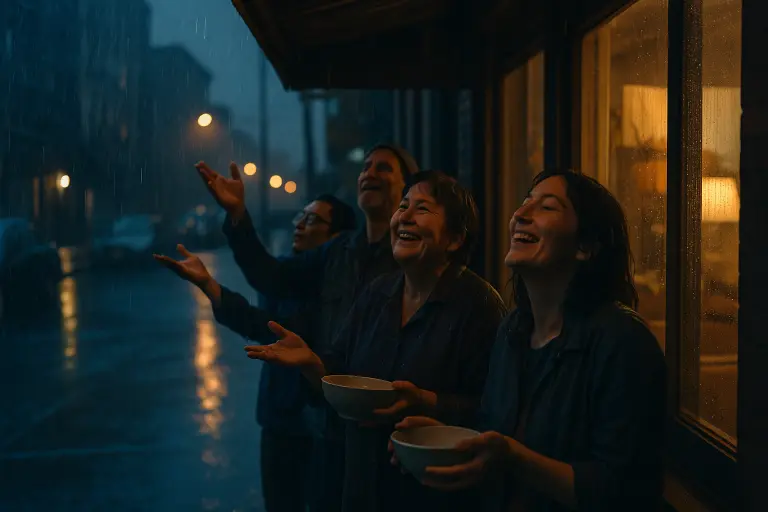
A few weeks ago, there was rain around dinner time. A neighbor texted us to bring bowls outside. She had learned, in a class, that the first five minutes of a storm smells different because of a soil bacteria and a pressure change. We stood under the awning and caught air with our palms and breathed it in. It was not online. No one tried to sell it to us. The rain just arrived and made our street new. The bowls were not necessary. The point was not to trap it.
Common Questions About Buying Randomness
What does it mean to buy randomness?
In the future described here, you would pay for services that intentionally introduce unpredictability into recommendations, routes, media, and shopping. Think of it as a subscription that loosens your filters within safety settings you choose.
Is buying surprise the same as gambling?
They both trade in uncertainty, but the goal and design differ. An entropy service is not about winning money; it is about encountering unplanned options. Good systems will include guardrails and consent, minimizing exploitative risk.
How would safety be handled?
Providers would likely offer settings for time of day, distance, content type, and intensity. Insurance and local policy would set boundaries. Users should be able to pause or stop unpredictability at any time.
Would this make our lives more chaotic?
Not if done well. The point is not constant disruption, but intentional pockets of surprise that keep life vivid. Think of marked windows, not a permanent storm.
Why pay for it when I can just do something different?
You can. Many of us already hack randomness into our days. Paying for it would systematize access and open doors to discoveries most individual hacks cannot reach, like citywide programs, curated maker networks, and coordinated routes. But the free version will always exist: take the long way, ask a stranger, buy the quince.
There will be essays like this, of course, turned into content by the same engines I am trying to step away from. They will get parsed and tagged and delivered into the narrowings we mistake for choice. And so the solution cannot just be a feature request. It is a practice. It is a vote for small lostness. It is, right now, at 11:47 p.m., closing the app that knows me and picking up the magazine I never subscribed to that someone left on the train. My hand knows how to do it. My feet do too.
There is a line I keep coming back to when I think about commerce and culture and the machines that move them. Products reflect behavior, not commerce. That means if we behave as if surprise has value, we will get products that help us find it. That is the hopeful version. The careful version knows that systems will try to sell us back the parts of us we forgot. The human version says: fine, maybe. But also, go outside when it smells like rain and take your own unplanned left.