The Old Refrigerator in the Garage and the Quiet Death of Repair
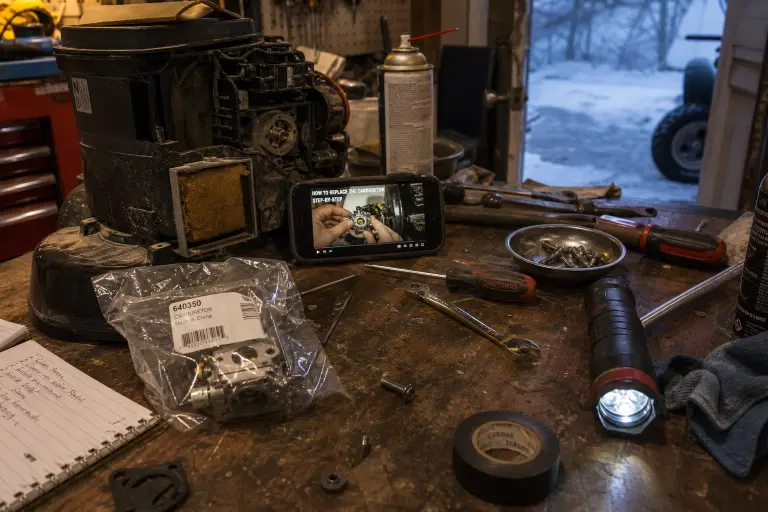
A man stands in his driveway in January with a snowblower that will not start. The snow is already turning gray at the edges. His gloves are wet. The machine coughs once, then goes silent. Twenty years ago, his father would have rolled it into the garage, pulled the carburetor apart on a workbench, and lined up the tiny screws in a coffee can lid. Today, he opens YouTube.
Thirty minutes later, he has learned two things. The carburetor is probably clogged. A replacement carburetor costs $18 on Amazon and can arrive tomorrow.
The snowblower cost $900.
The carburetor is considered disposable. The machine is becoming disposable. And somewhere between the search bar, the delivery truck, and the plastic bag of replacement parts, the skill to repair it has started to feel disposable too.
This is the quiet puzzle sitting in garages, basements, kitchens, and landfills all over the country: why does a refrigerator from 1985 still hum beside a stack of paint cans, while a six-year-old refrigerator in the kitchen might need a $900 control board?
And even when something can be fixed, why do so many of us replace it anyway?
The math that changes behavior
A broken appliance is no longer just a broken object. It becomes a comparison chart: repair estimate, replacement price, delivery time, labor, risk, and patience.
When replacement is cheaper, faster, and easier to imagine, the decision starts making itself.
Things used to be built differently, but not always better
It is easy to turn old appliances into saints.
There are refrigerators from the 1950s still cooling soda in garages. KitchenAid mixers that have made cookies for three generations. Cast iron pans blackened by a century of breakfasts. Mechanical watches that still tick because someone, somewhere, kept them cleaned and oiled.
These objects carry a kind of moral weight now. They seem to accuse the newer things around them. The cracked plastic vacuum. The printer with a warning light. The smart television that still has a good screen but no longer gets updates for the apps people actually use.
Then
Repair was part of ownership. People expected screws, belts, relays, and access.
Now
Many objects arrive as sealed systems, built to be replaced before they are understood.
The drift
We did not choose wastefulness all at once. We were trained by price, speed, and convenience.
But memory smooths the rough edges.
Old appliances were not always better. Many used far more electricity. Cars from the 1960s and 1970s needed regular tune-ups, oil changes, belts, points, plugs, hoses, and patience. A road trip carried a small expectation of mechanical drama. People did not worship durability because everything worked perfectly. They expected things to break.
The difference was that breaking did not always mean ending.
A washing machine was not a sealed mystery box. It had belts, pulleys, switches, hoses, and motors that a careful person could understand. A refrigerator had a compressor, thermostat, fan, relay, and enough empty space around the parts to reach them with human hands. A radio had tubes or components that could be removed and replaced.
The repair was part of ownership.
That relationship shaped behavior. People kept manuals in kitchen drawers. They saved screws in jars. They knew a neighbor who could solder, a brother-in-law who could rebuild a small engine, a shop downtown that could fix a vacuum cleaner. The product was not imagined as perfect. It was imagined as serviceable.
That may be the real dividing line between then and now. Not old good, new bad. Not nostalgia against progress.
Repairability was once built into the expectation of the object.
When repair stopped making sense
The modern household is full of little calculations that end with a shrug.
A printer runs out of ink, and the replacement cartridges cost nearly as much as a new printer on sale. A stick vacuum loses suction, but the replacement battery and filter assembly push close to the price of a new model during a holiday promotion. A smart TV still turns on, but the operating system is old, the apps are slow, and a streaming stick becomes the workaround until the whole thing feels annoying enough to replace.
A refrigerator stops cooling. The technician says the control board has failed. The part might cost a few hundred dollars. Labor adds more. If the sealed system is also involved, the conversation changes tone. Suddenly the owner is standing in that strange emotional aisle between repair and replacement, doing math that feels both practical and wasteful.
Dishwashers create the same moment. A pump, control panel, or heating element can fail on a machine that is only a few years old. The repair might be possible. But if the service call, labor, and part approach half the cost of a new dishwasher, many households choose replacement. Not because they hate fixing things. Because the numbers push them there.
Manufacturers became extraordinarily good at mass production. They learned how to make appliances, electronics, furniture, and tools at prices that would have amazed earlier generations. Global supply chains, automation, cheaper plastics, container shipping, and big-box retail changed the math of ownership.
But the same system that made products cheaper also made long-term support less natural.
Parts inventories cost money. Service manuals require openness. Modular design can add expense. A product that is easy to repair may need more space, stronger fasteners, and components that can be accessed without destroying half the shell. That is not always what wins in a market where shoppers compare features, finishes, and discounts before they compare repair diagrams.
A small list of modern repair traps
- Replacement batteries priced near the cost of a new device
- Control boards that make a cheap failure feel expensive
- Glued parts and sealed cases that add risk to opening the object
- Holiday discounts that make replacement look like thrift
Consumers followed the money.
If the new coffee maker costs $39 and the replacement carafe costs $24, what lesson is the market teaching? If a new microwave is on sale for less than a service visit, what does thrift even mean? If a phone battery is glued under a screen that might crack during repair, how many people will risk it?
We did not wake up one morning and decide to become wasteful. We were trained by price, speed, and convenience.
Where did all the repair shops go?
Many towns once had an ecosystem of repair.
TV repair shops. Radio repair counters. Vacuum stores with belts hanging on pegboard. Small appliance shops that could fix a toaster, mixer, lamp, or fan. Shoe repair shops that smelled like leather, glue, and polish. Watchmakers who worked under magnifying lenses in the quietest corner of a storefront.
Hutchinson, like many Midwestern towns, once had more of this practical infrastructure. The exact names changed over time, but the pattern was familiar: hardware stores that knew parts, downtown businesses that serviced what they sold, appliance dealers with repairmen, people who could sharpen blades, mend seams, patch shoes, rebuild motors, and tell by sound whether a machine was worth saving.
Something was gained in that shift. Access expanded. A person in a small town can now order parts that once required a trade account. They can watch a repair done step by step by someone across the country.
That world did not disappear all at once. It thinned.
First the television became cheaper to replace than to repair. Then radios became small enough to toss in a drawer. Then big-box stores changed where people bought appliances. Then online shopping changed where people bought parts. Then younger customers stopped knowing the repair shop existed, and older owners retired without successors.
When was the last time you saw a vacuum repair shop?
A toaster repair shop?
A television repair shop with a neon sign in the window?
Many younger adults have never had the experience of carrying a broken household object into a shop and speaking to a person who had fixed hundreds just like it. Their repair counter is a search bar. Their parts department is a marketplace listing with uncertain reviews. Their local expert is a stranger's video watched at 1.25 speed while kneeling on the garage floor.
Something was gained in that shift. Access expanded. A person in a small town can now order parts that once required a trade account. They can watch a repair done step by step by someone across the country.
But something was lost too: the ordinary presence of repair as a local habit.
We did not just lose repair shops. We lost repair people.
There was a generation that seemed to fix by reflex.
They welded gates, sewed buttons, sharpened knives, rebuilt carburetors, patched bicycle tubes, resoled shoes, mended fences, replaced cords, cleaned burners, and kept coffee cans full of hardware because you never knew when a certain screw would save a Saturday.
Their children learned some of it. Maybe they could replace a belt, change oil, wire a lamp, unclog a drain, sew a hem. But they also lived through the rise of cheaper consumer goods. They repaired some things and replaced others.
Today, many people never learned because nobody taught them, and because the objects stopped inviting them in.
A modern refrigerator is part appliance and part computer. A modern car is part vehicle and part network. A washing machine may contain sensors, circuit boards, electronic locks, proprietary diagnostics, and parts hidden behind panels that feel designed to discourage curiosity. Even small devices use clips that snap, screws with unfamiliar heads, glued batteries, sealed casings, and warnings that suggest opening the thing is an act of trespass.
This matters because skill is not only knowledge. It is confidence built through repeated contact.
If you grew up watching someone repair a mower, you learned that the machine was not magic. If you held the flashlight while a parent changed a belt, you learned that things have insides. If you were allowed to fail on a cheap radio or a bike chain, you learned the emotional part of repair: frustration, patience, and the small victory of function returning.
What disappeared with the shopfront
Repair was not only a service. It was a place where people learned that objects could be understood, handled, and returned to use.
Without those experiences, repair feels like risk.
People are also busier now in ways that matter. A household with two working adults, child care, gig work, long commutes, remote meetings, and constant digital interruptions may not have the loose Saturday afternoon that repair often requires. The problem is not just lack of ability. It is lack of margin.
Modern life compresses patience.
Why convenience quietly defeated repair
Consider a broken coffee maker.
Repair means diagnosing the problem, searching for symptoms, watching videos, finding the model number, hoping the part still exists, ordering it, waiting, clearing space, locating tools, opening the machine, discovering one hidden clip, breaking that clip, improvising, reassembling, and hoping the fix worked.
Replacement means clicking buy.
It arrives tomorrow.
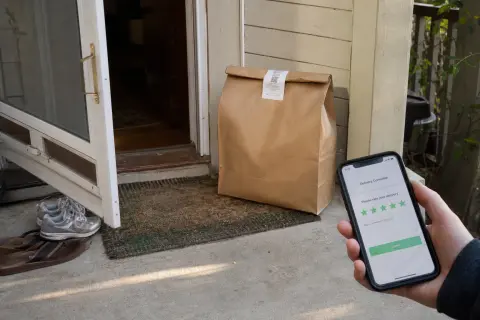
Same-day delivery, cheap imports, constant sales, buy now pay later offers, and algorithmic recommendations have made replacement feel almost frictionless. The internet does not simply sell products. It reduces the emotional cost of giving up on the old one.
This is why it is too easy, and too smug, to call consumers lazy.
Most people are responding rationally to the system around them. If repair takes time, uncertainty, tools, confidence, and sometimes nearly as much money as replacement, while replacement takes a few taps on a phone, the outcome is predictable.
The system rewards replacement.
There is another force at work too: upgrade culture. Phones trained people to expect improvement every few years. Streaming devices trained people to treat software support as part of product life. Social media made the new purchase visible and the repaired object invisible. TikTok can make a countertop appliance go viral overnight, while the quiet repair of an old one earns no social signal unless it becomes restoration content.
Even environmental guilt has to compete with convenience. People may care about waste and still replace the vacuum. They may dislike landfills and still buy the new printer. Values do not always survive a busy Tuesday with a broken appliance and guests coming Friday.
That is not hypocrisy. It is human life under pressure.
The right to repair asks who really owns the thing
The right to repair movement grew from a simple frustration: if you bought something, should you be able to fix it?
Groups like The Repair Association have pushed for access to parts, manuals, diagnostic tools, and software needed by owners and independent repair shops. Farmers have fought for the ability to service tractors that depend on locked software. Independent phone repair businesses have challenged systems that make simple repairs difficult or impossible without manufacturer approval. State laws and policy debates have increasingly focused on whether companies must provide the information and parts required to keep products alive.
The question sounds technical, but it is cultural.
Ownership used to mean a certain authority over an object. You could open it, alter it, mend it, lend it, resell it, or ruin it. Increasingly, ownership feels more conditional. A product may depend on software updates, cloud services, approved parts, paired components, subscriptions, or diagnostic codes only the manufacturer can access.
That creates a strange feeling. You bought the object, but some part of it remains elsewhere.
The right to repair movement asks whether customers are owners or merely licensed users of physical things. It also asks what happens to towns when only distant companies can authorize repair. Every locked device is not just a technical choice. It is a decision about local skill, local business, and how long objects are allowed to remain useful.
The strange return of repair culture
Here is the twist: repair is coming back, just not in the old form.
YouTube is full of repair channels. Some teach practical fixes. Others restore rusted tools, old fans, vintage mixers, watches, knives, radios, game consoles, bicycles, and forgotten machines pulled from barns. Millions of people watch strangers take things apart and make them whole again.
This is not only instruction. It is comfort. Restoration videos offer a rhythm modern life rarely provides: damage, attention, process, patience, renewal.
No meeting invite. No software update. No subscription screen. Just hands, tools, material, and time.
Repair cafes have appeared in cities and towns where volunteers help people fix lamps, clothing, small appliances, and electronics. Facebook groups trade advice about old tractors, sewing machines, lawn equipment, and vintage audio gear. 3D printers make small plastic parts that manufacturers no longer sell. Online communities identify obscure screws, gaskets, switches, belts, knobs, and clips from a single blurry photo.
Young people who were never taught repair are learning sideways. They may not have inherited a workbench, but they have comment sections, forums, teardown videos, digital manuals, and a growing suspicion that constant replacement has made them dependent in ways they do not like.
Something deeper is happening.
People miss understanding how things work.
In an automated world, repair returns a feeling of agency. It says the object is not beyond you. The system is not closed. Your hands still matter.
The appliance that survived fifty years
Ask around long enough and somebody will mention the garage refrigerator.
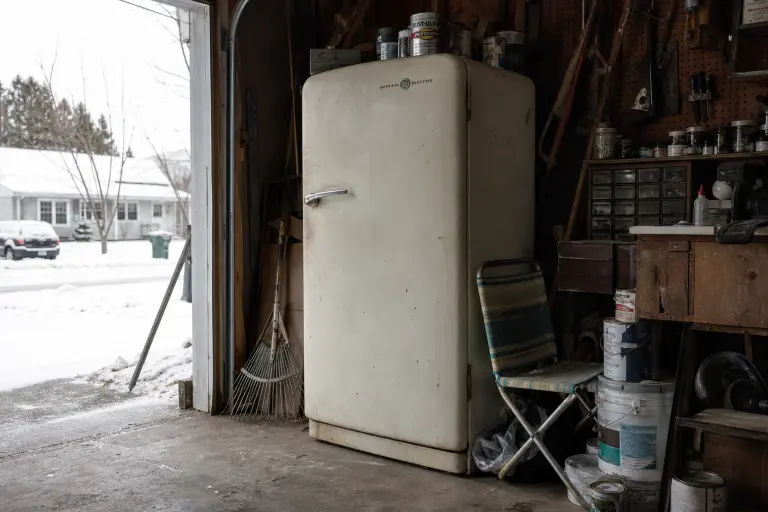
It is often almond, avocado, harvest gold, or plain white with a handle worn smooth by decades of use. It stands on a concrete floor beside rakes, fishing poles, paint cans, and a freezer full of deer meat or summer sweet corn. It may have outlived two kitchen remodels. It may hum too loudly. It may cost more to run than any modern efficiency label would approve.
And yet it keeps going.
In one familiar Hutchinson kind of story, the refrigerator began in the kitchen, moved to the basement when the family upgraded, then moved to the garage when the basement was finished. Children grabbed popsicles from it. Teenagers hid soda in it. Someone taped a cracked shelf. Someone else replaced a cord. At some point, nobody remembered exactly how old it was. It became less an appliance than a member of the household staff.
It is not magical. It is not morally superior. It may be inefficient. It may be living on borrowed time.
But it represents a different relationship between people and possessions.
Objects were once allowed to have long biographies. A mixer did not become obsolete because the color changed. A pan did not need a software update. A freezer did not care about a new product cycle. A tool could move from one hand to another with the dents already included.
These things became companions because they stayed long enough to collect memory.
That is why an old appliance in a garage can feel strangely comforting. It suggests continuity in a culture of churn. It says not everything has to be refreshed, replaced, optimized, or discarded.
Some things can simply remain useful.
What happens in 2075?
By 2075, repair could go in two very different directions.
In one future, everything is sealed. Appliances are cheaper up front but tied to service plans, software locks, and subscription features. A refrigerator may cool without a subscription, but advanced diagnostics, energy optimization, food tracking, or warranty protection may depend on ongoing payment. Products may self-report failure, order replacements, or shut down unsafe functions without allowing an owner to intervene. The idea of opening a device at home may seem as odd as repairing a smartphone motherboard feels to many people now.
In that future, ownership becomes access. Repair becomes permission.
But there is another possible future.
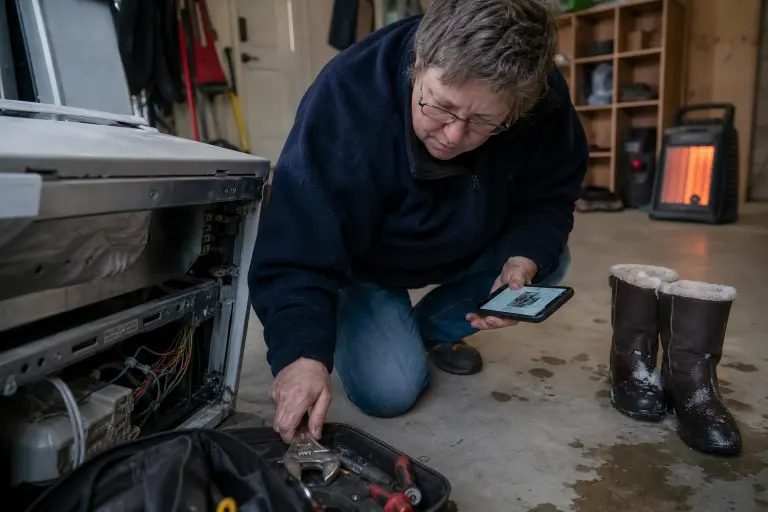
Artificial intelligence could make repair easier than replacement. A person might scan a broken dishwasher with a phone or household diagnostic tool. The system could identify the failed part, show a visual repair path, warn about electrical risks, and generate a step-by-step guide specific to that exact model. A local micro-manufacturing shop could print or machine a replacement bracket, latch, gear, or housing within an hour. Common parts could be standardized because governments, consumers, and manufacturers finally recognized the waste of one-off designs.
The future repair person may not arrive with only a toolbox. They may carry a scanner, a compact printer, diagnostic software, and access to shared part libraries.
Ironically, technology may save repair culture from the damage technology helped create.
The question is whether the tools will belong to owners and communities, or only to the companies that made the machines.
Common questions about repair culture and modern appliances
The old refrigerator is asking a bigger question
Maybe the real question is not why appliances became junk.
Maybe it is why we stopped expecting them not to be.
That expectation changed slowly. One cheap printer at a time. One sealed battery at a time. One repair estimate that made no financial sense. One delivery box that arrived faster than a replacement part. One child who never watched anyone take apart a machine and put it back together.
A society reveals itself in what it repairs.
When repair disappears, the loss spreads beyond appliances. Furniture becomes temporary. Skills become optional. Local shops become memories. Traditions thin out. Communities forget the people who knew how things worked. Even relationships can begin to absorb the logic of replacement: if it becomes difficult, move on.
That may be why a rattling old refrigerator in someone's garage feels more meaningful than it should.
It is not just keeping drinks cold.
It is preserving an older promise: that some things were built with the expectation that they would stay, and that people were expected to know them well enough to help them last.