The Disposable Life
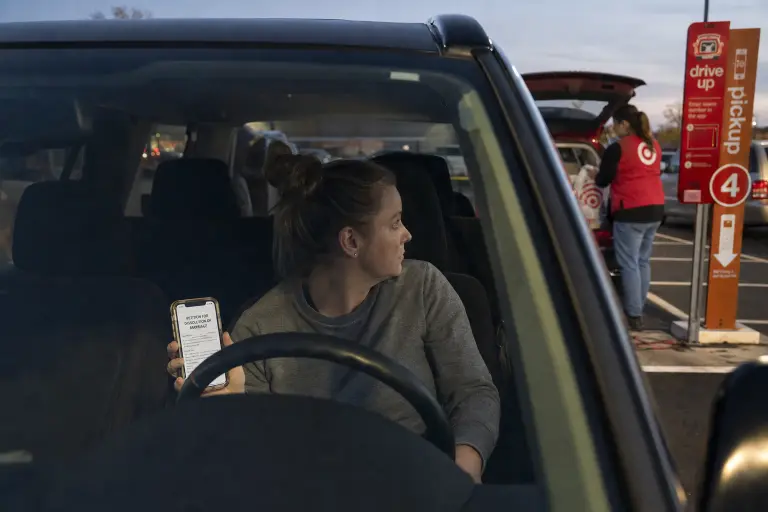
She sat in the Target pickup lane with the engine running and the divorce papers still open on her phone. The signature had taken less than a minute. Then the groceries came. Then dinner. Then a message from Tinder waiting in the same parking lot where fifteen years had just become a PDF.
The whole thing was almost offensively neat. A thumbprint, a confirmation screen, a small digital checkmark that seemed too clean for the size of the thing it ended. Her lawyer had written, all set. The employee in the red vest knocked on the trunk, loaded two paper bags, scanned a barcode, and smiled with the practiced softness of someone trained not to linger.
Nothing dramatic had happened. No affair. No screaming match. No shattered plate. Just two people who had become difficult for each other in a world where difficult things increasingly felt optional.
The modern breakup rarely looks like a crash
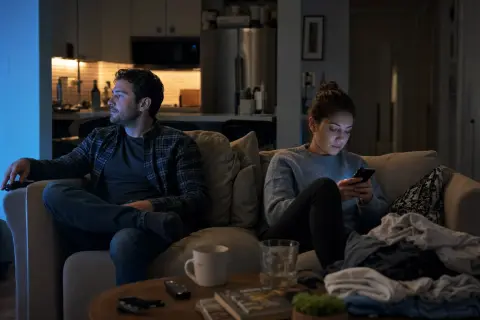
It looks like a slow accumulation of tiny exits. A second bedroom becomes a retreat. Dinner becomes parallel scrolling. A complaint becomes a podcast episode sent without comment. A quiet week becomes a normal month.
The marriage did not break like glass. It expired like a subscription.
That line carries the hard truth of the story. Older marriages were often held together by reasons that were not always noble: money, religion, shame, children, social pressure, lack of options. The world used to trap people in marriages that should have ended.
But the modern world has solved many old traps by building a thousand new doors. Some are necessary. Some are merciful. People should not have to stay in cruelty, fear, humiliation, or emotional starvation because the surrounding culture cannot imagine another life.
Still, something else changed alongside that freedom. The habits we learned from modern life - speed, optimization, personalization, replacement - have quietly entered the home. We have been trained by nearly every system around us to expect friction to be a sign that something is wrong.
When did replacing become easier than repairing?
Amazon did not invent impatience. It simply made impatience feel reasonable. A broken coffee grinder once required a small decision. Could it be fixed? Was there a local repair shop? Did someone know how to open the bottom panel and check the wiring?
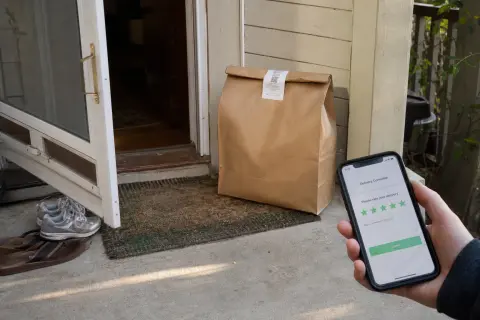
Now a replacement can be at the door by tomorrow morning, sometimes before guilt has time to appear. This is not just shopping. It is a training system. The body learns that friction is a sign something is wrong. A loading circle feels like disrespect. A delayed package feels like failure.
The same feeling travels. A conversation gets hard, and part of the mind reaches for the emotional equivalent of the return button.
A person does not become shallow because they want out. They become conditioned by systems that teach them, over and over, that almost anything can be replaced.
Streaming changed more than what we watch
Commitment used to be built into boredom. You watched what was on because that was what was on. You waited a week for the next episode. A film could ask something of you. A book could sit on a nightstand until your mood caught up with it.
Streaming gave us abundance, which is not the same as satisfaction. Now many people spend longer choosing something than watching it. If a show does not grab within eight minutes, it is abandoned. If a song does not fit the moment, the thumb flicks it away.
What this does to relationships
Long relationships have seasons that do not immediately reward the viewer. There are months of logistics, exhaustion, medical appointments, credit card statements, child care, job stress, and stretches where love is not cinematic. It is administrative.
Marriage still runs on old technology: repetition, sacrifice, maintenance, delayed gratification, staying present during uncertainty. Modern culture runs on refresh.
Dating apps did not create desire. They changed its weather.
Dating apps offered something real: access. For lonely people, shy people, queer people, recently divorced people, busy people, and people whose social circles had collapsed into work and errands, the apps opened rooms that did not exist before. But access has a cost when it begins to resemble inventory.
The swipe teaches the hand that evaluation should be instant. It teaches the eye to scan for disqualifiers. It teaches the lonely mind that possibility is endless, even when emotional capacity is not. The woman in the parking lot was not wrong to open Tinder. She was hurt, scared, relieved, ashamed, and curious all at once. The message waiting for her was not love. It was proof that the future had not gone dark.
Still, there is a difference between hope and escape, and modern platforms are very good at blurring the two. They do not have to promise happiness. They only have to promise that something else is available right now.
Social media made comparison domestic
No one compares their marriage to an average Tuesday. They compare it to anniversary captions, vacation kitchens, gym mirror transformations, baby announcements, engagement rings, soft-lit date nights, and the careful public evidence that other people are being loved correctly.
Social media did not invent envy, but it made envy portable. It fits in a pocket. It comes to bed. It sits on the couch between two people who are too tired to talk.
The result is not always jealousy. Sometimes it is a subtler grief: the sense that somewhere, other people have figured out how to live with more beauty, more ease, more recognition.
Why this matters
Relationships struggle when the performance of growth moves faster than growth itself. A new haircut, a new apartment, a new gym routine, a new vocabulary of healing can all be posted before the deeper work has even begun.
The self can be rebranded in a weekend. The marriage cannot.
Therapy language gave people names for pain, and exits for discomfort
Words like boundary, trauma, gaslighting, emotional labor, attachment, nervous system, and codependency have helped many people survive. For many, those words became a path out of real harm.
But useful language can also become a shield against complexity. A partner who disagrees becomes unsafe. A difficult conversation becomes toxic. A request becomes emotional labor. The language of healing, pulled from context and flattened by social platforms, can turn ordinary relational discomfort into evidence that escape is self-care.
Sometimes it is. Sometimes it is not. The difficulty is that modern culture is not very good at separating danger from discomfort, incompatibility from fatigue, abuse from immaturity, or a true boundary from a refusal to be inconvenienced.
Work takes the first version of us
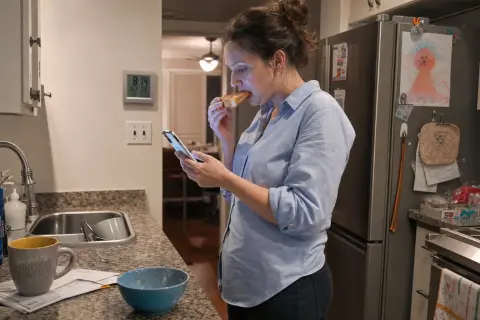
By the time many people come home, the best of them has already been spent. They have performed calm in meetings, answered messages with exclamation points they did not feel, absorbed layoffs, tracked bills, managed child care, refreshed delivery windows, sat in traffic, or worked from the same table where they later try to eat dinner with another human being.
Remote work solved some problems and created stranger ones. It dissolved the boundary between public effort and private exhaustion. For couples, this meant more physical proximity and sometimes less true encounter.
The hidden cost of depletion
Modern work culture does not only drain time. It drains interpretive generosity. When people are depleted, they read each other poorly. A sigh becomes contempt. Silence becomes rejection. A forgotten errand becomes proof of a larger moral failure.
Love requires surplus. Not luxury, necessarily, but some margin of attention.
The disappearance of small social friction matters
Self-checkout is not the cause of divorce. Food delivery is not the enemy of love. Remote work did not ruin community by itself. But small frictions used to keep people lightly practiced in each other.
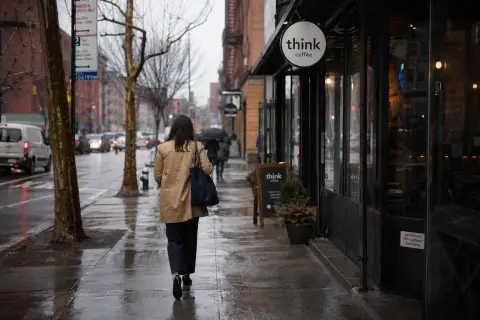
You chatted with the cashier. You waited at the deli counter. You ran into someone from school at the grocery store. You asked a server what they recommended. You met coworkers in hallways, not just in scheduled rectangles on a screen. You ate in public and remembered that other people had moods, delays, needs, and strange little ways of being.
Convenience is not empty. It often protects people from overstimulation, disability barriers, bad service, unsafe streets, wasted time, and the sheer burden of modern schedules. But a life with fewer low-stakes human encounters may leave people less practiced at the high-stakes ones.
AI companionship will not arrive as a monster
It will arrive as relief. That is what makes it powerful. An AI companion will remember the story you told three weeks ago. It will answer without checking its phone. It will not come home resentful. It will not misunderstand your tone unless programmed to.
For people who are lonely, grieving, neurodivergent, socially anxious, elderly, isolated, or simply tired of being misread, this may feel less like a threat and more like mercy.
The risk
The danger is not that people will suddenly prefer machines to humans in some cartoonish way. The danger is that machine companionship may quietly lower our tolerance for the messy reciprocity of being loved by someone who has their own needs.
What will love look like in 2065?
By 2065, the language of compatibility may sound less romantic and more clinical. Couples may subscribe to emotional operating systems that monitor tone, sleep cycles, spending habits, stress hormones, message timing, facial tension, conflict frequency, and household labor distribution.
Rings may track more than steps. Mattresses may know who slept at the edge. Kitchen sensors may notice when two people stop eating together. Calendar systems may predict resentment before either partner says the word. A relationship dashboard might offer a stability score.
Green means connected. Yellow means drift. Red means intervention recommended.
At first, this will be marketed as support. And in some ways, it could help. Imagine a system that notices one partner has slept badly for fourteen nights and gently suggests postponing a difficult financial conversation. Imagine early warnings before contempt hardens. Imagine abuse detection becoming more precise, private, and actionable for people who need help leaving.
Prediction
Efficiency likes prediction. It prefers prevention. It treats pain as a system failure.
The tradeoff
Some couples may separate before the major fight, before the betrayal, before the long winter of trying.
The haunting part
Humanity may become incredibly efficient at avoiding relational pain while slowly losing the ability to build the depth that only forms on the far side of some pain.
The last unoptimized thing
What happens when human relationships are the last major part of life that still require patience in a world engineered to eliminate patience? We are beginning to find out.
People still want love. That is obvious in the endless songs, the wedding videos, the dating profiles, the late-night searches, the second marriages, the saved voice notes, the way people still look across restaurants hoping to be chosen by someone who understands them.
The problem is not that love disappeared. The problem is that love now competes with systems built to satisfy the self quickly, privately, and with minimal negotiation. Love asks for negotiation. Love asks someone to encounter limits: their own, and another person's.
A quieter future is still possible
There are marriages that should end. There are homes where leaving is the first honest act. There are people who find themselves only after closing a door that everyone else wanted them to keep open.
But there are also relationships that do not need disposal. They need maintenance. Not glamorous maintenance. Not caption-worthy transformation. Just the difficult, ordinary work of returning to the table, saying the clumsy thing more clearly, apologizing without performance, noticing the dishes, touching a shoulder in passing, making room for the fact that both people are changing and neither has become obsolete.
The rarest luxury in the future may not be convenience, speed, personalization, or choice. Maybe it will simply be two people who stayed.
The woman in the Target parking lot eventually drove home. The groceries shifted in the trunk. Her phone lit up twice. The Thai food would arrive soon. The dating app message would still be there. The divorce papers were no longer waiting for her signature.
There was no single feeling big enough for the moment. Only a strange mixture of sadness, relief, embarrassment, hunger, and the faint modern comfort of knowing that logistics would continue to work even when love had not.
That may be the defining loneliness of our time: the systems hold us beautifully while the relationships slip.