The Pile in the Hallway: How Easy Buying Became Hard Living (and What Comes After)
On a Tuesday morning in late spring, there is a pile in the hallway. Ordinary, almost invisible, and suddenly heavy with the quiet work of managing what was easy to buy and complicated to keep.
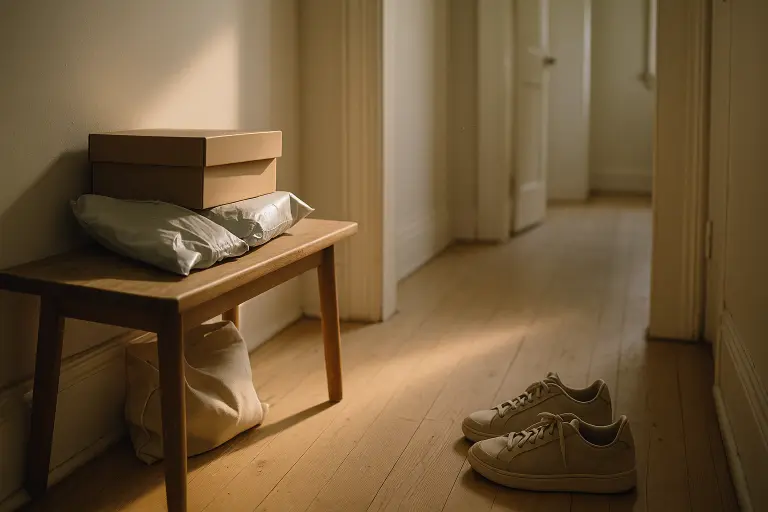
On a Tuesday morning in late spring, the kind where light turns everything flat and forgiving, there is a pile in the hallway. It leans against the entry bench like a houseguest who arrived too early. Two shoe boxes, a plastic mailer with a sliver torn open, a soft cube that might be a set of towels, or a jacket, or something purchased honestly, late at night, in the fog between curiosity and sleep. The pile is not extraordinary. It is ordinary in a way that has become invisible. Every eighth house in this neighborhood has one. Maybe more.
Mara, who works from the dining table, steps over it twice before her first meeting. She does not look directly at it. Her calendar has a color coding system for deadlines, but there is no color for the silent, accumulating weight of things that were easy to buy and complicated to keep. She knows at least one of the shoe boxes contains a pair that was half a size off, a brand she trusted, a size she has been in every other universe except this one, where the fabric stretched differently or the last was narrower by a whisper. She knows, without thinking, that the return window for the towels is in five days, because the email said so, because they always say so, because the clock starts ticking the moment your finger touches Buy.
There are no villains in this scene. There is no moral rot. There is, instead, the aftermath of ease. Twenty years ago, buying things online felt daring, like an early morning flight. The box on the porch was not just an object; it was proof. We had navigated the internet, we had trusted a stranger with our card number, we had summoned something to our door. I remember the specific thrill of the first time I watched a package move along a map, pixel by pixel, toward my city. We told ourselves that everything would simplify. Friction would be removed. Our closets would become extensions of suggestion engines. Our kitchens would reorder their own filters. Nothing heavy, nothing slow.
How did friction shift from checkout to our homes?
The friction did move, but not out. It shifted into a new economy: the labor of managing. At first, it was delightful. Free returns were the civic holiday of the 2010s. We learned to treat our homes as fitting rooms. Try it at home, they said. Keep what you love, they said. Labels printed inside the box, just peel and stick, they said. To borrow a phrase from behavioral economists, the transaction costs appeared to vanish. In truth, they hid behind thick curtains of time and attention. And we, eager citizens of the frictionless future, volunteered to do the rest.
The rest turned out to be a lot. It included tape, and printers that never had ink, and learning which codes mapped to which carriers, and remembering that the store down on 7th accepts boxless returns but only before 7 p.m. It included the lull of guilt that hummed between the 12th and 29th day of a 30-day window. It included an inventory of maybe-keep, maybe-return decisions that ran in the background of our minds like a humming appliance. It involved texts to friends: Does this fit right? and Does this color look cheap? and I am returning three out of five because my conscience says so, right? Somewhere in those years, a strange bookkeeping took root.
Why does the hallway pile feel so heavy?
Because the pleasure of shopping quietly became the burden of managing outcomes. When decisions are deferred, they leave open loops that tax our attention. The pile is not just cardboard; it is a queue of unresolved choices.
Where do you see the bookkeeping of returns in everyday life?
Ask your friends and they will tell you they have a return drawer, a return bag, a return corner. They have screenshots of return QR codes in old text chains with themselves.
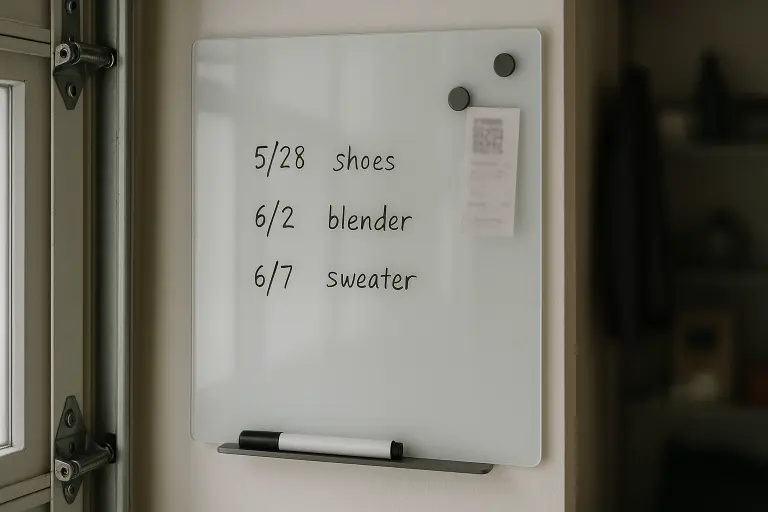
Some have Notion pages called Returns and Repairs. One friend keeps a whiteboard by her garage door where she writes, in careful script, the dates: 5/28 shoes, 6/2 blender, 6/7 sweater.
Another, a developer by trade, wrote a small script that scrapes her inbox daily and compiles all open return windows into a priority list, sorted by last pickup date.
She did this not because she is neurotic, but because her brain is full and the world keeps asking it to remember micro-deadlines for things it never asked to memorize.
Are retailers to blame, or is something else happening?
We did not notice that the pleasure of shopping had quietly become the burden of managing outcomes.
It would be convenient to place the blame entirely on companies. Some of it belongs there. The wave of reverse logistics startups of the late 2010s marketed their services on how to maintain conversion without wrecking margins. Narvar and Optoro and Happy Returns taught retailers to make returns painless for us, and to route the pain back into networks of restocking, refurbishing, discounting, and occasionally landfill. Amazon normalized boxless drop-offs and later introduced small fees in certain cases to stem the tide. Zara and H&M toyed with charging for returns, a cultural signal that the era of pure generosity was not sustainable. Many of us felt chastened, then indignant. Had we not been promised a world without friction?
But look closer. The exhaustion is not only about money. It is not even about time in the strict sense. It is about the feeling of being made responsible for undoing nearly as much as you do. Buying became easy, so we bought more quickly. Deciding became difficult, so we deferred it. Deferring decisions generates a tax called anxiety. The pile in the hallway is a monument to delayed cognition.
A friend who works at a city library described it perfectly when she said, I feel like I am running a small returns department in my house. The job has all the KPIs of a real one. Throughput. Timeliness. Error rate. Customer satisfaction. Except the customer is me and a version of me two weeks from now.
This feeling has curdled into a kind of buy anxiety that is not about price tags. People with means will open a shopping app, fill a cart, and then watch it sit there like a museum exhibit for three days. It is not fear of spending; it is dread of the follow-up. Will this generate more tasks than it satisfies? Is the probability of return greater than the joy it will bring? In a tinkerer household, a Bluetooth speaker sat unopened for a full month because of a moral problem: what if the sound is too sharp and I cannot live with it, but I also cannot bear to begin the process of sending it back? The path of least resistance was to do nothing, a behavior that once would have signaled financial hesitance and now signals cognitive triage.
What cultural signals mark a shift away from the return era?
You can see, in the data, the outlines of a cultural turn. Return rates that surged in the 2010s have begun to flag slightly as fees creep in and fatigue sets like a low-pressure system. The rise of critics on TikTok pushing deinfluencing in 2023 was a small but telling pushback against a decade of hauls and unboxings. Buy It For Life threads made a quiet resurgence, a minor religion of durability practicing against the frictionless flood. Local Buy Nothing groups grew thick with exchanges the moment brands tightened return policies; the informal economy is quick to respond.
How are households adapting right now?
Meanwhile, a different adaptation is happening in the private sphere. People are buying less not because they have less money, but because they are designing their lives to reduce the number of open loops. A project manager we spoke with instituted a personal rule called One Outcome Per Purchase: I will only buy something if I can say, with conviction, how I will dispose of it if it does not fit into my life. She keeps a running list of reliable resale communities and donation channels. A father of two instituted what he calls Decision Sabbaths: no buying of discretionary items during the first week of the month; any impulse is captured and revisited on the 15th. When the 15th comes, the majority of impulses have dissolved, leaving a handful of durable wishes.
Why do returns feel like paperwork to cancel regret?
All of this gently contradicts the swagger of the 2010s. Easier did not mean freer. It meant the opposite of free. It meant trapped between options, tasked with returning what the world funneled in. We built the highways of commerce so wide that indecision could spin donuts.
Maybe this is simply maturation. The early internet was adolescence: quick thrills, fast love. Then came the reckoning: a dawning understanding that convenience is a kind of debt. You pay it back in the currency of tiny tasks. A QR code is a promissory note for a future errand.
There is a reason this, of all adult chores, feels so punishing. The work of returning is performative bureaucracy. You gather evidence (the box, the receipt), you petition an institution (the portal), you obey choreography (scan here, drop there), and you do it not for art or friendship but to undo a choice. It is bureaucratic repentance. Humans can do a lot of paperwork when the paperwork points to something bigger than itself: a mortgage, a passport, a registration for a school. But a return? A return is paperwork to cancel regret.
What will change first: tools, or our relationship with objects?
And yet, we continue to live with things. We continue to test, to try, to adjust. The tension has not halted commerce, only bent it toward a different rhythm. It is not a collapse so much as a fatigue that asks for new rituals.
Set the near future next to this fatigue and the picture changes further. The most interesting signals are not in the obvious places. Yes, there are better try-on tools creeping into our browsers. AR fitting rooms no longer feel like a novelty demo; a teenager in my building scans her foot with her phone the way earlier generations tested a battery against their tongue. Smart sizing from brands that rely on body maps generated by social dances and workout apps are quietly reducing guesswork. But there is something larger downstream from this. The rise of digital product passports in the EU is a signpost that objects will carry richer biographies: where they were made, how they can be repaired, who serviced them. Those passports are meant for circularity, but they also say something about relationship. If things have histories we can read, we may be more careful in welcoming them home. We may favor objects that declare their exit routes up front.
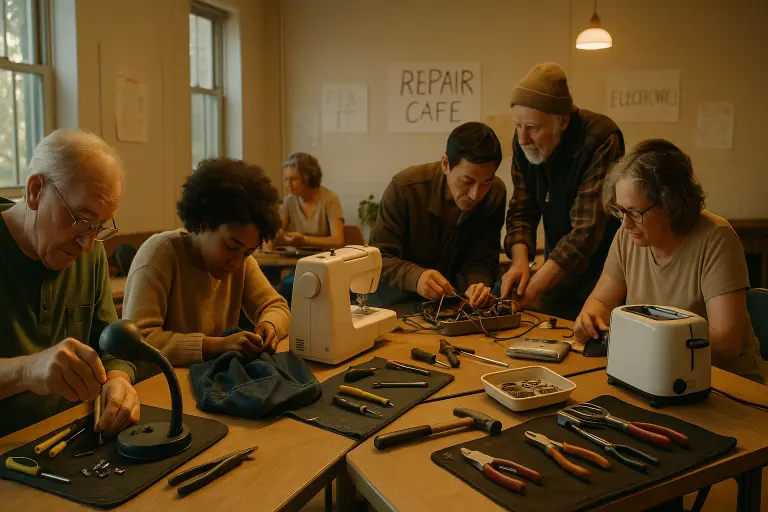
Some companies, to be fair, saw this coming and pulled other levers. Returnless refunds for cheap items became common and created their own moral murk. We have all heard a version of this: keep it, not worth returning. Households responded with donation boxes and group chats: Anyone need a mini tripod? Free, brand new. The local economy absorbed some of the slop. So did thrift stores, so did landfills, which is the part we avoid thinking about when our hallways fill with boxes. In reaction, a different economy grew at the edges: repair cafes in church basements, tool libraries stitched into urban neighborhoods, maker moms who resew shapeless shirts into fitted ones. We got better, for a minute, at saving ourselves from the loop by relying on one another.
A quiet pivot from returns to revisions
Now imagine skipping fifty pages ahead in this story. Place us forty or fifty years from now in a kitchen that has not changed much in shape, but in practice is unrecognizable. The pile in the hallway is gone because the things that would have made it do not ask to go back; they change. Household goods in 2070 are fluent.
How do adaptable products rewrite the return?
Garments come with adaptive fibers that tighten or relax in response to a body map, adjusting in micro moves, not dramatic acts, until they align with you. Shoes learn your gait by the fourth block and reshape their shape memory to absorb your variance. Even a cheap lamp in 2070 negotiates with your home agent: the light is too cool, you say, and the lamp receives an update to its phosphor pattern, or a cartridge snaps in from a neighborhood kiosk without fuss because the lamp is not a final form. Most purchases are like this. They are starting points.
The point is not to stage a sci-fi montage full of glowing panels. It is to show that return fatigue, in the end, pushes design culture toward adaptability. If the pain of returns is that they undo decisions, the cure is to make fewer final decisions at the outset. That is not a slogan. It is a quiet reorientation: from objects as completed acts to objects as mutable agreements.
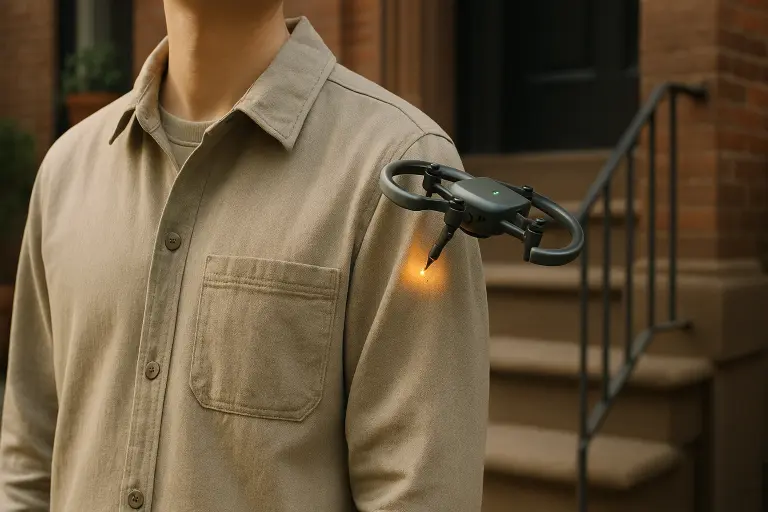
In such a house, you do not return the blender because the noise is a little piercing. The motor shell is standard, the sound muffler ring is swappable, the container wall is double thickness by request of your home agent that knows your kid is sensitive to certain frequencies. You do not return the jacket because the shoulders feel broad; a tailor-drone meets you on the stoop and heat-tweaks the seam line. You do not return the watch because the face is too bright in sunlight; a software patch adjusts reflectivity, and a microfilm overlays the glass, slid in like a contact lens.
Design culture
The future, if we let it, pushes design culture toward adaptability. Fewer final decisions at the outset; more living adjustments over time.
Ownership
In 2070, buying often means licensing a platform that lives inside the object. The shell belongs to you. The intelligence belongs to the manufacturer for a term. Modules belong to a marketplace.
Returns, rephrased
The language of returns undergoes a soft morph into the language of permissions: you do not send the thing away; you rescind an ability.
Who gets this adaptable future?
This is not simply convenience to the point of decadence. It is also greener, because fewer journeys are made in contrition. Logistics are local: neighborhood micro depots stock high-variance parts; courier networks are bikes and small bots that move within a mile or two. The old reverse logistics chain exists, but it is smaller, specialized. The bulk of alteration happens close to you, because the object has permission to become a version of itself that fits you.
Ownership shifts with this, too. Once objects can adapt, the question of who owns what morphs. In 2070, buying often means licensing a platform that lives inside the object. The shell belongs to you. The intelligence belongs to the manufacturer for a term. Modules belong to a marketplace. You may choose to rent certain capabilities seasonally: this coat has winter muscle for four months; thereafter, it returns to a lighter default that breathes better and uses less maintenance. Kitchen appliances in 2070 arrive dumb by default, intelligent in increments; you avoid buying features you will not use because those features are virtual, rentable, discardable. The language of returns undergoes a soft morph into the language of permissions: you do not send the thing away; you rescind an ability. The mental chore list shrinks because the number of packages moving in and out of your door shrinks.
Access and equity
By this point, you may feel the familiar twinge that accompanies all promises of the future: who gets this? Who lives in this frictionless apartment of 2070? It is a fair question. The shape-shifting jacket will not be cheap the first decade it exists. But as with everything in tech that becomes infrastructure, the baseline moves.
3D printers that made toy trinkets in the 2020s evolve into municipal makers that produce standard modules for common objects. Cooperative workshops, born from a pandemic-era maker movement and matured by necessity, become public utilities. The class line in 2070 is not between those who can adapt their objects and those who cannot; it is between those who can afford proprietary ecosystems and those who rely on open platforms and community kits. The pile in the hallway recedes in both places, because both have learned to aim for fewer outbound journeys.
How does sharing and borrowing replace the return?
And somewhere in this turn, return culture finds its antidote not only in adaptation but in social choreography. Objects are not only returned to stores less often; they return to society more often, as shares and loans and time-bound passes. A drill does not travel via postal van to a warehouse; it travels via text message to the neighbor downstairs who needs it, and in the background, an inventory layer acknowledges that it has gone from your household to your block. Ownership becomes right-of-use braided with accountability. In the best moments, it is not mechanical. It is human again. You knock on a door and ask for salt.
What early previews are already here?
On some weekends now, long before 2070, you can see previews of this in parking lots and churches. The repair cafe is packed. Kids learn to mend in after-school programs. A new store opens two neighborhoods over that sells things meant to be altered: furniture with exposed fasteners, clothes with seam allowances that invite later decisions, lighting systems with slots that say please, add more light. The shopkeeper has a community notebook where you can write the hacks you learned. A mother adds a note: this bag takes a stroller clip well on the left loop. These notes are not unlike the product passports the EU imagines, except they are written as letters.
Does adaptability simply create new chores?
The skeptic might ask: are we just moving the work again? Will 2070 households be full of neat piles of modules and patches, a different kind of unseen labor? Maybe. Human life does not rid itself of chores; it shifts them. But there is a meaningful difference between chores that undo a decision and chores that improve it. In the kitchen of the near future, where you spend a Wednesday evening swapping in a quieter impeller on your fan while dinner simmers, you are doing something more satisfying than taping a box closed. You are nudging an object closer to the life you live.
Culture does not change because ideas are good. It changes because attention is scarce. Return fatigue has taught us a boundary: do not spend attention on administrative repentance when you can spend it on adjustment. Retailers will adapt, because they have to, but households move first. We notice what we avoid. We avoid the pile in the hallway. We buy fewer things that risk turning into tasks. We pay a small premium for the privilege of adaptation. Or we find it locally, with a neighbor, a club, a collective, a borrowed device in a plastic bin.
In quieter moments, the early 2000s return to mind. I remember my first online purchase not because of what I bought but because of the feeling. That feeling was not wrong. It was the thrill of reaching toward a future that wanted to be helpful. The fatigue of today is what happens when that helpfulness is abstract, when it offers ease at the price of invisible coordination. The future, if we let it, wants to be specific: to teach a lamp to speak softly and a shirt to hold a shoulder differently. Convenience is not a debt then. It is a dialogue.
Common Questions About Return Fatigue and Changing Buying Behavior
Why does returning an item feel more exhausting now than it used to?
There are more micro-steps than ever, and they have migrated into our homes. We juggle QR codes, deadlines, carrier choices, and drop-off windows. The work is administrative and often time-boxed, which creates low-grade anxiety. It is less about the money and more about managing open loops.
Are retailers intentionally making returns harder?
Some are adding friction, like small fees or limited windows, because sky-high return rates are costly and wasteful. But the larger issue is that the perceived ease of buying pushed more decisions into the back end. Even when returns are generous, the cognitive load falls on us. That is what feels hard.
How are people adapting without simply buying less?
Many are creating personal systems: return calendars, decision fasts, and buy-it-for-life mindsets. Community behaviors help too, like borrowing and swapping. Some consumers now favor brands that design for repair, alteration, and modularity, which reduces the chance of a return by enabling adjustment.
What technologies might reduce return fatigue in the next few decades?
Expect better fit prediction from body mapping, richer product passports that explain repair and resale paths, and local micro-fulfillment for modules and alterations. Products themselves will adapt more: clothes with adjustable fibers, appliances with swappable components, and software-defined features you can add or revoke.
Does this future just shift the burden from returning to repairing?
There will still be work, but it is different work. Instead of undoing choices, you improve objects to fit you. That tends to feel more meaningful and less urgent. Local networks and standardized parts can keep the effort low, and community resources can share the knowledge required.
What becomes of the pile in the hallway?
Late on that Tuesday, after the first set of meetings and before a round of emails, Mara finally faces the pile. She opens the shoe box and tries again. On the second step of the stairs, something feels right. The seam at the ankle gives slightly, the arch rests into place. She exhales. The towels, she realizes, were a panic purchase after seeing a friend's bathroom on social media. She can return them, but she can also place them in a donation bag for the shelter where her sister volunteers. She writes the date on the whiteboard anyway, because the habit is hard to shake. Then she picks up the plastic mailer, shakes out a jacket, and considers the shoulders. She knows a tailor two blocks away who can lift the seam a fraction. The thought lands not as a task, but as a plan. The hallway clears a little. Not all at once. Enough to move.