The Price Is Not the Price: Why Tipping Should Not Have Survived This Long
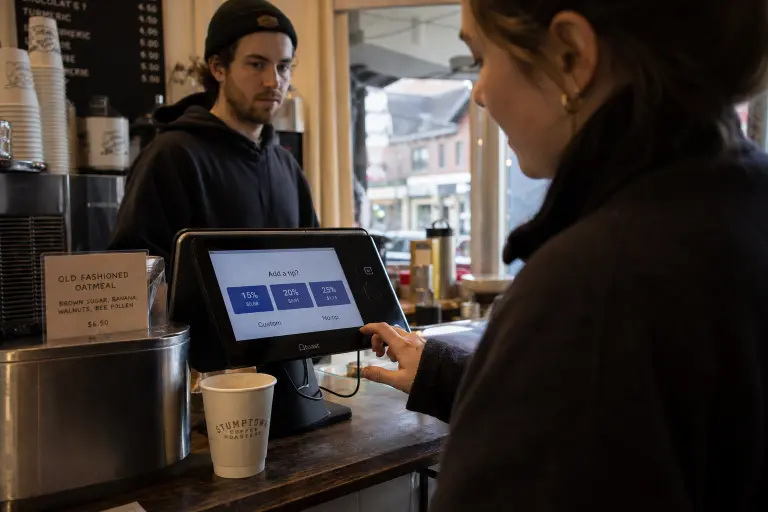
There is a small pause that happens at the end of certain purchases now. It arrives after the meal, the haircut, the coffee, the ride home. The screen turns toward you. Three buttons glow. 20 percent. 25 percent. 30 percent. In that moment, the transaction changes shape. You are no longer only paying for what you bought. You are being asked to perform moral arithmetic in public.
It is astonishing that this is normal. More astonishing still, it is legal. Tipping survives not because it is rational, fair, or humane, but because it has been absorbed into culture so deeply that many people confuse familiarity with justice. A business sells a product or service, hires workers to produce or deliver it, sets prices, and then asks the customer to separately cover the worker's income through an optional emotional surcharge. In almost any other industry, this would sound absurd.
How did tipping become normal?
Tipping did not begin as a noble expression of gratitude between equals. Its roots are tangled in aristocracy, class hierarchy, and social control. In Europe, it developed among the wealthy as a way to reward servants and lower-status workers, carrying a message that the powerful could decide what labor was worth beyond any fixed arrangement.
When tipping spread in the United States after the Civil War, it was controversial. Many Americans saw it as anti-democratic, a leftover from European class systems. Anti-tipping movements formed, and some states even banned the practice in the early twentieth century. Critics argued that tipping degraded workers and turned customers into petty masters. They were not wrong.
The legacy that still sits underneath the custom
The practice found fertile ground in one of the ugliest chapters of American labor history. After slavery was abolished, many Black workers in hospitality and service roles were hired for little or no base pay, with employers expecting them to live on tips. Tipping became a mechanism through which businesses could exploit workers while avoiding direct wage responsibility. It allowed employers to say: your income is not my obligation. Please collect it from the public.
Why does tipping feel so emotionally heavy?
The genius, and the cruelty, of tipping is that it converts a structural problem into a personal one. If a worker is underpaid, the customer is made to feel responsible. If the customer cannot afford to add 20 or 30 percent, they feel guilty. If the worker has a bad shift, they may blame customers, even though the person who designed the pay structure is somewhere else entirely, reviewing margins.
Who benefits from the tension?
This is how tipping protects the wrong people. It diverts attention away from ownership and management and redirects frustration horizontally, between workers and customers. The worker depends on the customer's mood. The customer resents being asked to pay extra. The owner benefits from both sides participating in the ritual.
Why anecdotes do not fix a broken system
A bartender at a packed urban cocktail bar may earn strong tips on a Friday night. A breakfast server at a rural diner, a hotel housekeeper, a delivery rider, or a restaurant worker on a dead Monday may not. A fair labor system cannot be built around best-case stories.
This is not hospitality. It is wage insecurity with manners.
The rise of the guilt screen
In the last decade, tipping has escaped the dining table and moved into the software interface. Point-of-sale tablets changed the choreography. What used to be a quiet decision written on a receipt became a public prompt. The cashier swivels the screen. The customer chooses. The worker waits. The machine smiles.
This is one of the clearest cultural signals of our time: payment technology has become a tool for behavioral pressure. Digital tipping prompts expanded during the pandemic, when many people genuinely wanted to support frontline workers who were risking their health while everyone else ordered takeout and stayed home. That impulse was real. But businesses learned something from that period. They learned that customers could be nudged into subsidizing labor through interface design.
Now tip prompts appear at self-serve kiosks, bakeries, takeout counters, vape shops, stadium concessions, food trucks, and places where the customer does most of the work. The request may be small, but the meaning is large. It says the price is not the price. It says the worker's compensation is not fully included. It says your conscience is part of the checkout process.
This has produced what people now call tipping fatigue. The phrase sounds light, almost comic, but beneath it is a deeper exhaustion. People are tired of being asked to solve inequality one receipt at a time. They are tired of needing a moral stance when buying a sandwich. They are tired of not knowing which workers depend on tips and which prompts are simply added revenue streams.
The burden should sit higher up
The anger is not, or should not be, aimed at workers. It should be aimed at the business model. A worker asking for tips is usually navigating the same unfair system from the more vulnerable side. The deeper question is why a modern business is allowed to present labor cost as an optional add-on.
The price should be the price
There is something honest about a posted price that includes the true cost of doing business. If a meal costs 22 dollars to prepare, serve, and support with properly paid labor, then charge 22 dollars. If it costs 28 dollars, charge 28 dollars. Customers can decide whether they can afford it. Workers can know what they earn. Owners can compete on food, service, efficiency, and values instead of hiding labor costs in social pressure.
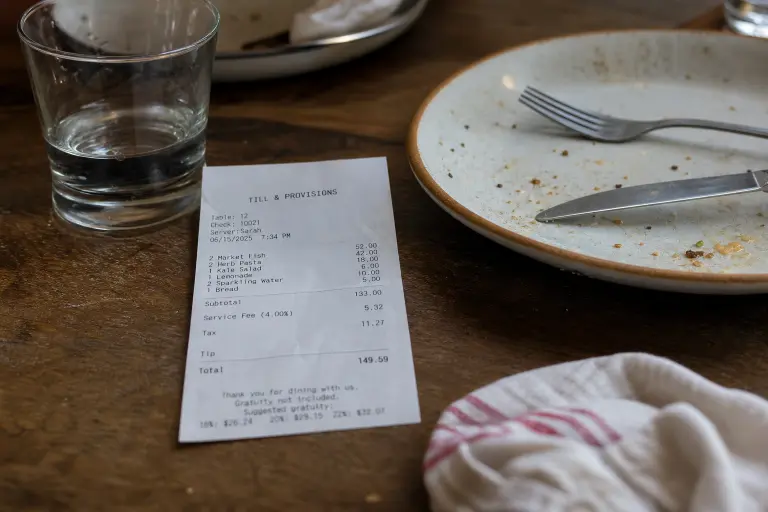
The common objection is that prices would go up. Of course they would, at least visibly. But customers are already paying. The difference is that tipping makes the cost feel separate and voluntary, even when it is socially mandatory. A 20 dollar meal with a 20 percent expected tip is not really a 20 dollar meal. It is a 24 dollar meal with anxiety attached.
Does tipping improve service?
Not reliably. Service quality depends more on staffing, training, pay, management, and workplace culture. Many industries deliver excellent service without tips because employees are paid directly by their employers.
Do some workers earn well from tips?
Yes, sometimes. But exceptions do not justify a broken model. A fair labor system cannot be built around nights when the room is full and the weather is kind.
What does tipping do to workers?
Income rises and falls unpredictably while rent, childcare, medication, and fuel remain fixed. Workers also absorb bias, retaliation, and harassment in a system where the payer can punish them for almost anything.
What should replace tipping?
A proper wage, transparent pricing, strong labor protections, and optional bonuses or profit sharing where appropriate. Customers can still express gratitude, but survival should not depend on it.
What tipping does to workers
To understand tipping honestly, listen to the rhythms of a tipped worker's life. Income rises and falls unpredictably. Rent does not. A server may walk into a shift not knowing whether they will leave with enough to cover groceries. A delivery driver may spend hours absorbing fuel costs, vehicle wear, weather, traffic, and app algorithms, only to depend on a customer's afterthought.
Tipping also makes workers vulnerable to retaliation. A customer can punish a server for a slow kitchen, a menu price, a policy, or their own bad mood. Workers may hesitate to enforce boundaries because income is at stake. Harassment becomes harder to challenge when the harasser is also the payer.
The international comparison
In many countries, service is included, wages are wages, and tipping is either minimal or unnecessary. People still eat dinner. Cafes still function. Hotels still operate. The idea that hospitality collapses without tipping is not a law of human behavior. It is a story told by industries that benefit from the arrangement.
A possible future without tipping
Imagine a city in 2071. Not a utopia. Just a place that learned from its own receipts. Restaurants still exist. Some are quiet and expensive. Some are loud, crowded, and cheap enough for students. The human theater of eating out survives, because tipping was never the soul of hospitality.
The bill is boring now, almost beautifully boring. The menu price includes labor, tax, service, and platform costs. If a place cannot pay workers properly at that price, it cannot legally operate at that price. Wage transparency is standard. Service workers have predictable hourly pay, healthcare contributions, scheduling protections, and in some places a share of revenue during busy periods.
The change did not happen because everyone became kinder. It happened because law, technology, and culture finally aligned. Digital payment systems made hidden fees easier to track. Worker organizing exposed wage theft and tip pooling abuses. Younger consumers, already angry about rent, debt, and algorithmic pricing, rejected moral checkout prompts.
What would it take to end tipping?
Ending tipping is not as simple as telling customers to stop tipping tomorrow. That would punish workers first. The exit has to be structural.
First, the tipped minimum wage should be abolished everywhere. There should be one minimum wage, and it should be livable. Second, menu and service pricing should become transparent. Third, wage theft enforcement needs teeth. Stronger audits, easier reporting, and meaningful penalties would make exploitation more expensive than compliance.
Fourth, customers should shift their anger upward. Do not blame the worker for the prompt. Ask businesses how employees are paid. Support places with clear no-tipping policies and fair wages when possible. Vote for laws that remove tipped wage loopholes.
A quieter kind of fairness
The most radical thing about ending tipping is how ordinary life would feel afterward. People would still go out. Workers would still smile when they meant it and have tired days when they did not. The difference would be that the emotional blackmail would be gone.