The Wallet That Forgot How to Feel Special
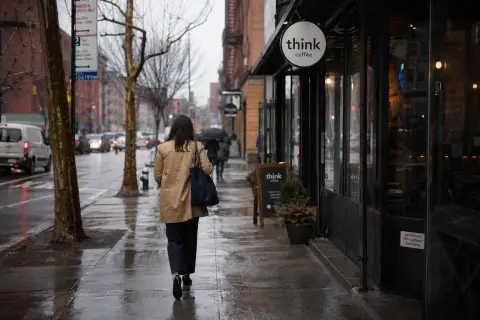
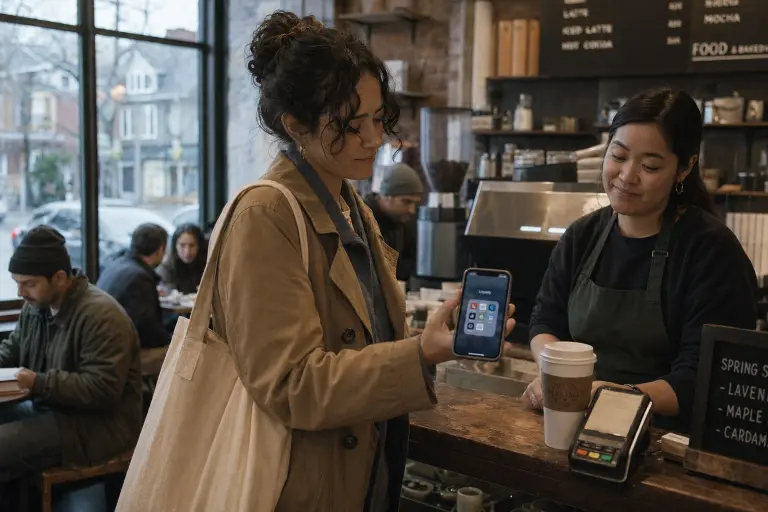
On a rainy Thursday morning, Maya stood in front of a coffee counter with her phone open, not because she was choosing coffee, but because the coffee had become the smallest part of the transaction.
The barista had already placed a paper cup near the register. Maya wanted the same thing she ordered twice a week: an oat latte, warm, no foam, because she drank it while walking to the train and foam always found a way to mark her coat. The line behind her shifted with the quiet impatience of people performing small public efficiencies. Someone tapped a smartwatch against a terminal. Someone else asked if the seasonal syrup counted toward the bonus drink challenge. The barista asked Maya if she was a member.
She was. Probably.
Maya searched her phone. There was the coffee app in a folder called Food, except the folder had expanded over the years into a small city of icons: grocery, pharmacy, sandwich shop, airline, hotel, cosmetics, pet food, gas, bookstore, movie theater, workout studio, and one that seemed to belong to a place she had visited once during a layover. A red notification bubble sat on the coffee app, offering her double stars if she bought two handcrafted beverages before Sunday. Another app reminded her she had 672 points expiring in 12 days, though not enough for anything she wanted. A third thanked her for being part of an inner circle and then asked her to pay 9.99 a month to remain there.
By the time she found the right barcode, the latte no longer felt like a treat. It felt like admin.
Why loyalty stopped feeling like a favor
What began as a simple promise - come back and we will make it worth your while - has become a background hum of points, tiers, badges, credits, perks, challenges, birthday months, anniversary offers, member-only pricing, subscription bundles, partner benefits, and exclusive access to things that often turn out to be available to everyone three days later.
The abundance has not made people feel more valued. It has made value harder to feel.
Why did every purchase become a relationship?
Loyalty programs used to be physical and finite. A punch card lived in a wallet until it softened at the corners. Buy nine coffees, get the tenth free. Fly enough miles, earn a seat upgrade. Shop at the same grocery store, collect coupons for items you actually bought. These systems were imperfect, but they had a readable shape. You understood what was being asked of you and what you might receive.
Then phones turned every store into a software company. Once brands could build apps, collect data, personalize offers, and send reminders directly into people's pockets, loyalty stopped being a courtesy and became infrastructure. The reward program was no longer a thank-you note after the purchase. It was a machine built to guide the next purchase, and the one after that.
The emotional cost of unused benefits
People do not talk enough about the small shame of unused perks. Not dramatic shame. Not the kind anyone would admit to over dinner. More like a faint, irrational sense that you have failed to extract value from systems designed to be navigated.
Maya had a paid grocery membership that offered free delivery, but she still stopped at the corner market because she liked choosing her own tomatoes. She had airline miles scattered across three carriers, none enough for a trip. She had a warehouse club card she used twice a year, mostly to buy paper towels in quantities that made her apartment feel temporary. She had a meditation app subscription bundled into a bank account benefit, but the app asked her to log in with a code that never seemed to arrive. She had streaming services with rewards, ride-share credits that expired monthly, restaurant points in neighborhoods she no longer visited, and a premium credit card that turned ordinary life into a spreadsheet of categories.
The benefits were real, technically. That was the problem. They hovered around her like unfinished errands.
When a perk becomes homework
A benefit has emotional value only if it arrives as relief, not as another task to remember, compare, or redeem before it expires.
Why simple gestures still work
A local bakery slipping in an extra roll or a hotel clerk remembering a quiet room reduces friction instead of creating a puzzle.
Modern loyalty often asks people to optimize, compare, and maintain parallel identities across dozens of branded ecosystems.
When rewards stop feeling rewarding
The dilution of loyalty is not only about too many programs. It is also about the growing suspicion that rewards are being used to disguise worse deals.
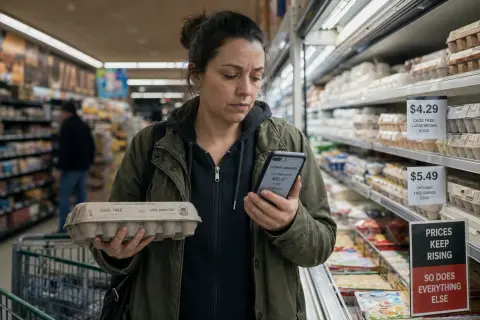
Consumers have learned to read the fine print emotionally, even when they do not read it literally. They notice when a fast-food app offers a deal only after prices have climbed. They notice when a coffee chain changes the number of points needed for a free drink. They notice when airline status becomes harder to earn and less generous to use. They notice when member prices appear on tags in ways that make non-members feel punished rather than members feeling appreciated.
This matters because loyalty depends on trust. A reward cannot feel generous if it seems engineered to recover its own cost. At the same time, consumers have become more willing to question the entire bargain. The deinfluencing trend, which spread through beauty and fashion communities, was not only about buying less. It was about resisting the feeling that every product needed a strategy.
A quieter generational split
Younger consumers are not anti-loyalty. They are loyal to brands that feel aligned with their values, humor, aesthetics, or community. But they are less patient with opaque mechanics.
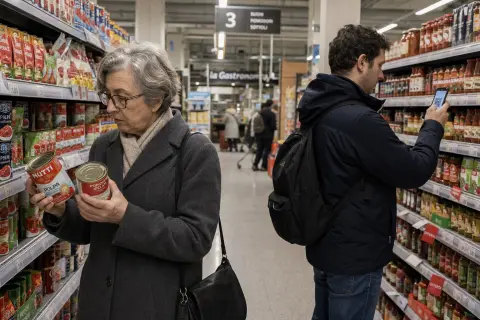
Older consumers, meanwhile, often feel abandoned by the digital turn. A senior who once clipped coupons from a newspaper now has to download an app, create a password, verify a phone number, and navigate a weekly offer grid to get the same grocery discount.
What would simpler loyalty look like?
The next phase of loyalty will likely begin with exhaustion. Not a dramatic collapse, but a slow refusal. People will stop downloading apps unless the value is immediate. They will abandon points that require too much tracking. They will use anonymous checkout when the discount is not worth the data.
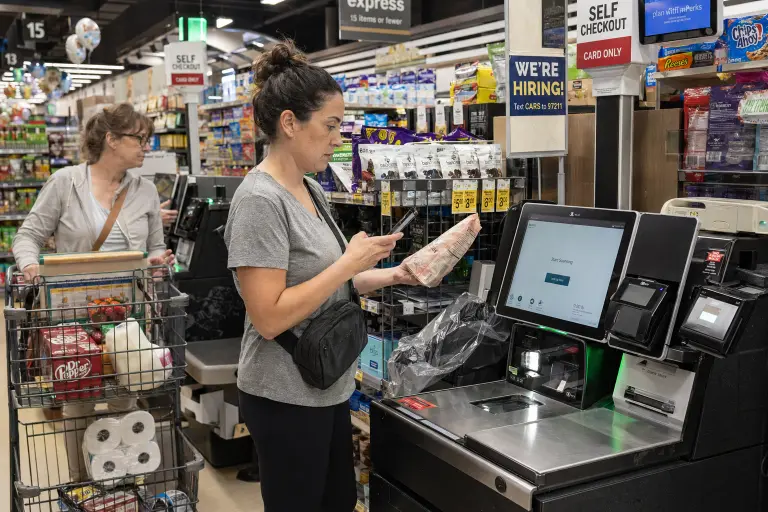
In the near term, simplification will come through aggregation. Digital wallets already hold boarding passes, payment cards, transit cards, IDs in some regions, and event tickets. It is not difficult to imagine them absorbing loyalty identities more fully. Instead of opening a pharmacy app, a grocery app, and a coffee app, a person might authorize a neutral wallet agent to apply the best available benefit automatically at checkout.
Banks and card networks
They already sit at the intersection of identity, payment, and rewards, and may push toward delegated savings rather than endless maximization.
Artificial intelligence
The real appeal will not be futurism. It will be relief: the discount applied, the expiring credit used, the membership canceled on time.
The most loved reward may turn out to be the simplest one: not earning more, but carrying less.
A morning in 2071
Forty-six years from now, Maya's granddaughter, Lina, will buy tea from a kiosk built into the wall of a transit garden in what used to be a downtown parking structure. The city will be quieter than Maya's was, not because people are calmer, but because so much of the old mechanical waiting will have disappeared.
Lina will not open a tea app. She will not scan a barcode. Her personal commerce steward, a regulated identity layer she controls through a civic wallet, will negotiate the transaction in less than a second. The steward will know her preferences, but only in the categories she has allowed. It will know she avoids disposable cups unless there is no return station nearby. It will know she prefers direct savings over branded rewards.
In 2071, loyalty will not disappear. Humans will still return to what feels reliable. But the formal machinery of loyalty will have changed because the old version asked too much of the individual.
What the future systems will do better
- Work across brands rather than trapping people inside them
- Convert points into useful savings or local value
- Reduce passwords, expiring balances, and repeated decisions
What will still matter
Quiet recognition. Reliable service. Repair, memory, and small forms of care that feel less like surveillance and more like being remembered by a place that expects you back.
How will brands learn the difference between being tracked and being known?
Being tracked means a system can identify that you bought cough drops, soup, and tissues on the same day. Being known means the pharmacy does not make you fight with a coupon while you are sick. Being tracked means a hotel knows you clicked on spa packages. Being known means it notices you arrived late after a delayed flight and gives you the quietest available room.
The brands that survive loyalty fatigue will be the ones that use technology to remove effort, not to multiply engagement. They will treat attention as something borrowed, not owned. They will make benefits legible. They will stop pretending that a 15 percent discount with seven conditions is a relationship.
Restraint matters
In commerce, every metric pushes toward more. But human loyalty often grows in the spaces where nothing is demanded.
The simplest future
A store lowers the price of bruised fruit instead of hiding the deal behind a login. A repair desk fixes the jacket without turning it into a campaign.
People are not tired of value. They are tired of managing value.
Common Questions About Loyalty Overload
Why do so many brands have loyalty programs now?
Brands use loyalty programs to encourage repeat purchases, collect first-party customer data, and communicate directly through apps, email, and digital wallets.
Why do loyalty programs feel less valuable than they used to?
There are too many of them, and many require effort to understand or use. When every brand offers a program, membership stops feeling special.
Are consumers becoming less loyal to brands?
What is fading is patience for complicated reward systems. Loyalty is shifting toward convenience, trust, transparency, and genuine usefulness.
How might loyalty programs change in the future?
They may become more automated and centralized, with digital wallets and personal AI assistants applying benefits automatically and canceling memberships that no longer provide value.
The quiet bargain
Back at the coffee counter, Maya finally scanned the code. The app chirped. She earned 23 stars, though she did not know whether that was a lot. Her latte appeared. The barista smiled with the practiced kindness of someone who had repeated the membership question a hundred times before noon.
Maya stepped back into the rain and took the first careful sip. For a second, the drink was only itself: warm, bitter, familiar, held between two cold hands. No challenge, no tier, no deadline. Just a small comfort on the way to work.
That is what loyalty programs have been circling all along, often clumsily. Not points. Not badges. Not the thrill of optimization. The hope is simpler than that. People want the places they return to again and again to make life feel a little easier. They want to be recognized without being studied too closely. They want savings without a scavenger hunt. They want the freedom to like something without joining another system.
The final lesson
The future of loyalty will belong to whoever remembers that a customer's attention is not proof of love. Sometimes it is only fatigue. And sometimes the most loyal thing a brand can do is stop asking so much.